
Many people want to lock their cabinets, but they don’t want to drill holes. Maybe you’re renting and can’t make permanent changes. Maybe you don’t want to damage your furniture. Or maybe you just want a simple, non-permanent solution. Whatever the reason, learning how to lock a cabinet without drilling is not just possible—it’s easier than you might think.
Let’s look at the best ways to secure a cabinet without using a drill. You’ll see many options, from simple adhesive locks to smart technology. Each has its own strengths. This guide will help you choose what works for your needs, budget, and skill level.
Why Lock A Cabinet Without Drilling?
People want to lock cabinets for many reasons. Child safety is the most common. Parents want to keep cleaning chemicals, medicines, or sharp tools away from curious hands. Sometimes, you need to protect valuables from roommates or guests. In offices, you may need a temporary solution for confidential files.
Drilling isn’t always the answer. Here’s why:
- Rental agreements: Landlords often forbid drilling holes in cabinets or walls.
- Furniture damage: Drilling leaves permanent marks and weakens the cabinet.
- Flexibility: You may want a lock you can remove or use somewhere else later.
- Short-term needs: Maybe you only need the lock for a few months.
Knowing your reason helps you pick the right locking method. For example, a parent of a toddler has different needs than someone storing important documents.
How Non-drilling Cabinet Locks Work
Non-drilling locks use clever designs. Instead of screws, they rely on adhesive pads, magnets, straps, or mechanical catches. Some use a combination of methods. The goal is to create a strong hold without permanent change.
Common technologies include:
- Strong adhesives (like 3M tape) for attaching lock bases
- Magnets that release the lock when a special key is applied
- Spring-loaded catches that snap into place
- Flexible straps that loop around handles
A big advantage: most non-drilling locks are easy to install and remove. Some leave no trace, while others may leave a little sticky residue that wipes away.

Credit: www.disteliuzmani.com
Types Of Cabinet Locks That Don’t Require Drilling
Let’s break down the main types. Each type fits different cabinet styles and security needs.
1. Adhesive Magnetic Locks
These locks are popular with parents. They’re invisible from the outside. You stick the lock inside the cabinet with adhesive. When closed, the cabinet stays locked. To open, you use a magnetic key on the outside. The magnet pulls a lever inside, releasing the lock.
Pros:
- Hidden from view
- No tools needed
- Strong hold (good brands hold up to 30 lbs force)
Cons:
- Magnetic key can get lost
- Adhesive may fail on some surfaces (test before using)
Example: The Safety 1st Magnetic Locking System is a top seller.
2. Adhesive Strap Locks
These locks use a flexible strap with adhesive ends. You stick each end to the cabinet door and frame. To open, press a button or slide a catch.
Pros:
- Simple to install
- Fits uneven or curved surfaces
- Good for both doors and drawers
Cons:
- Visible from outside
- Some kids learn to open cheaper models
Tip: Look for straps with strong 3M adhesive. Weak glue can fall off, especially in humid kitchens.
3. Sliding Cabinet Locks
These are common for cabinets with double handles (the “U” shaped type). The lock slides through both handles, preventing them from opening.
Pros:
- No adhesive or tools required
- Reusable and portable
- Easy for adults to use
Cons:
- Only works on cabinets with double handles/knobs
- Can be awkward for very thick handles
Not all sliding locks fit all handle types. Measure your cabinet before buying.
4. Cord Or Cable Locks
Cord locks use a looped wire or plastic cable that wraps around cabinet handles or knobs. You tighten the lock and secure it with a combination or key.
Pros:
- Adjustable length
- Great for multiple cabinets in a row
- Reusable
Cons:
- Not hidden
- Some cables can scratch metal handles
Some parents use simple bike cable locks for this purpose.
5. Suction Cup Cabinet Locks
These locks stick to the cabinet with strong suction cups. They work best on smooth, glossy surfaces like glass or shiny plastic.
Pros:
- No sticky residue
- Installs and removes instantly
- Works well for temporary needs
Cons:
- Weak on textured or porous surfaces
- May fail if not attached properly
Great for renters or travel situations.
6. Childproof Lever Locks
These locks are designed for cabinets with lever-style handles. They snap around the handle and block the lever from moving.
Pros:
- No tools needed
- Discrete look
- Strong, child-resistant design
Cons:
- Only fits lever handles
- Some models can be pried off if not installed tightly
Some models use a combination of adhesive and snap-on parts for extra strength.
7. Portable Padlocks For Handles
If your cabinet has eyelets or handles with a small gap, you can use a padlock. Choose a model with a plastic-coated shank to avoid scratches. No drilling—just lock and unlock when needed.
Pros:
- High security
- No installation required
- Use your own padlock
Cons:
- Only fits some handle designs
- Bulky look
This method is popular in shared offices.
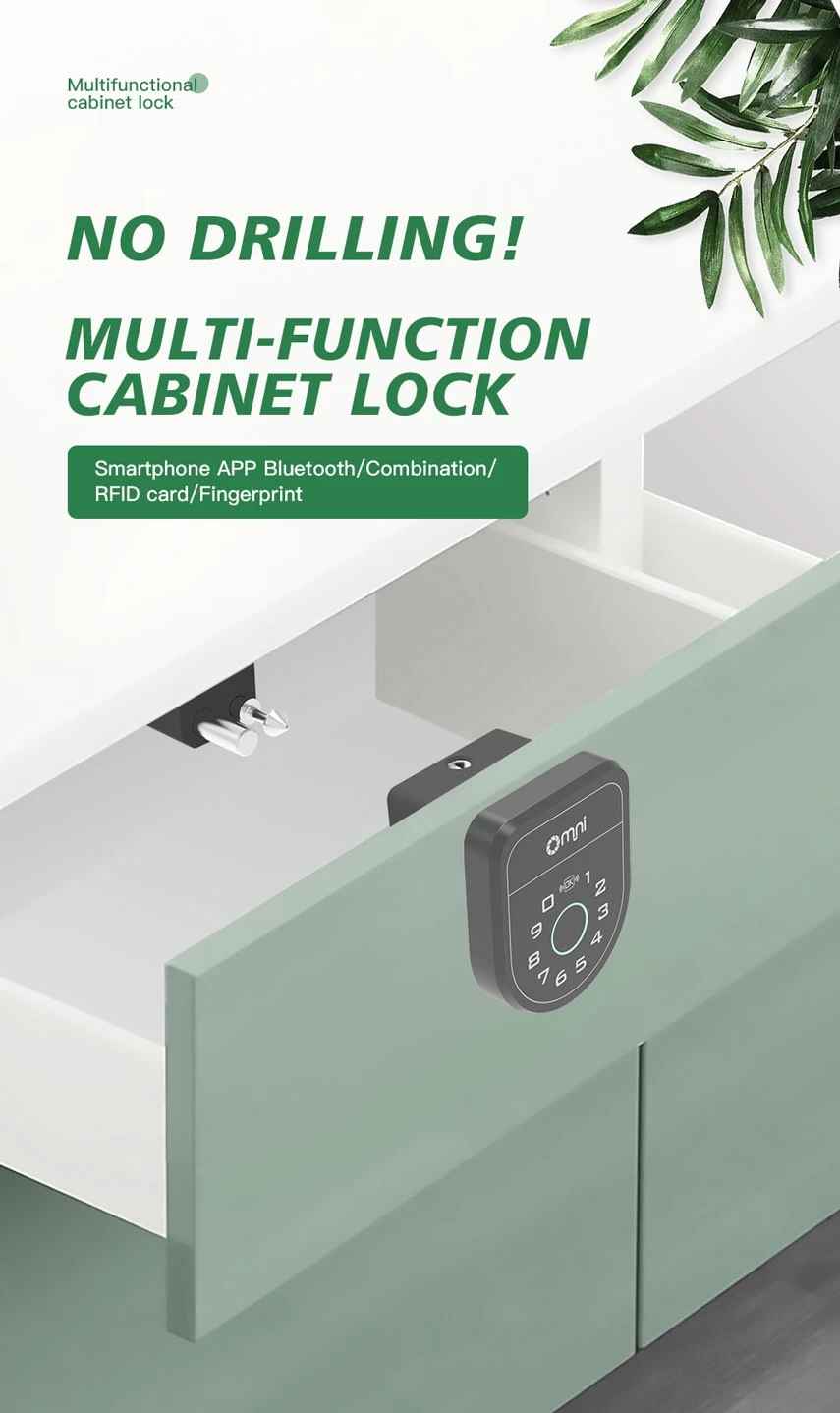
8. Smart Cabinet Locks
Smart locks use Bluetooth or Wi-Fi. You stick a lock to the inside of the cabinet and control it with your smartphone. Some even have alarms.
Pros:
- Keyless convenience
- Can monitor access logs
- Great for tech-savvy users
Cons:
- Expensive
- Needs batteries
- Setup can be tricky for beginners
Examples include the eGeeTouch Smart Cabinet Lock.
9. Velcro Or Hook-and-loop Locks
These simple locks use Velcro strips to stick the cabinet door closed. Not very strong, but useful for light-duty jobs.
Pros:
- Cheap and easy
- No tools required
- Good for travel
Cons:
- Not secure against strong pulling
- Visible from outside
Best for keeping pets out, not for valuables.
10. Combination Strap Locks
Some locks combine straps with combination dials. You set a code, and the strap only opens when the right numbers are dialed.
Pros:
- No keys to lose
- Adjustable strap length
- Child-resistant
Cons:
- More expensive than basic straps
- Combination dials can break if handled roughly
Good for older children or shared spaces.
Comparing Popular Non-drilling Cabinet Locks
To help you choose, here’s a quick comparison of the most popular types.
| Type | Best For | Installation | Security Level | Removability |
|---|---|---|---|---|
| Adhesive Magnetic | Parents with toddlers | Easy (5 min) | Medium-High | Leaves little/no mark |
| Adhesive Strap | Versatile use | Easy (2-3 min) | Medium | Removable, may leave residue |
| Sliding Lock | Double handles | Very easy (30 sec) | Medium | Fully removable |
| Smart Lock | High-tech homes | Medium (10 min) | High | Removable |
How To Install A Cabinet Lock Without Drilling
The steps will depend on the type of lock you choose. Let’s walk through the basic process for the most common types.
Installing An Adhesive Magnetic Cabinet Lock
- Clean the surfaces: Use alcohol wipes or soap and water. Dry completely.
- Mark the position: Hold the lock base inside the cabinet, line up with the edge.
- Peel off adhesive backing: Don’t touch the sticky side.
- Press the lock into place: Hold firmly for 30-60 seconds.
- Attach the catch piece: Align with the lock. Close the door to make sure it lines up.
- Wait: Let the adhesive cure for several hours (follow manufacturer instructions).
- Test with the magnetic key: Make sure the lock opens smoothly.
Practical tip: Some adhesives take 24 hours to reach full strength. Don’t stress-test the lock right away.
Installing An Adhesive Strap Lock
- Clean both surfaces (cabinet and door).
- Measure and mark where the strap ends will go.
- Remove adhesive backing from one end, stick it to the cabinet.
- Stick the other end to the door, making sure the strap is flat and not twisted.
- Press firmly for at least 30 seconds.
- Let cure as recommended.
Check that the strap tension is correct—the door should close fully and the strap should not be loose.
Installing A Sliding Cabinet Lock
- Open the lock by pressing the release mechanism.
- Slide the arms around both handles or knobs.
- Snap the lock closed to tighten.
- Test by pulling gently on the cabinet doors.
Sliding locks need no adhesives or tools. They’re reusable and portable.
Tips To Improve Non-drilling Lock Performance
It’s easy to make mistakes when installing non-drilling locks. Here’s how to get the best results:
- Clean surfaces well: Dust, grease, or moisture can cause adhesives to fail.
- Don’t rush: Give adhesives time to cure before using the lock.
- Test before full use: Check alignment and holding strength.
- Consider temperature: Adhesives may fail in very hot or cold areas.
- Replace worn parts: Straps and Velcro lose strength over time.
- Keep keys safe: Magnetic or combination keys can get lost easily.
An often-missed detail: cabinet material. Painted wood, laminate, and glass hold adhesives differently. Test a small area first if you’re unsure.
Credit: www.smartlockssupplier.com
Common Mistakes And How To Avoid Them
People sometimes install locks without reading instructions. This leads to problems like:
- Sticky residue: Using the wrong adhesive can damage the finish. Choose locks with removable glue.
- Wrong lock type: Forcing a lock onto the wrong handle type usually fails. Measure your cabinet first.
- Overloading cabinets: No lock can stop a determined adult. Don’t rely on non-drilling locks for high-security needs.
- Ignoring weight limits: Adhesive locks have limits. Check manufacturer ratings (most hold 20-30 lbs).
- Skipping cleaning: Oily or dirty surfaces make adhesives fail quickly.
For best results, choose quality brands. Cheap off-brand locks often use weak adhesives.
When Should You Not Use A Non-drilling Lock?
Non-drilling locks are great for kids and casual use. But sometimes, they’re not strong enough.
- High-value items: Jewelry, passports, or cash need stronger security.
- Heavy cabinets: Full pantries or tool chests can break adhesive locks.
- Public spaces: Offices with sensitive files may need metal locks.
- Outdoor use: Rain and temperature changes can ruin adhesives.
If you need real security, consider a drilled-in lock or a locking cabinet.
Real-world Examples
Let’s look at a few scenarios:
- Parents with toddlers: Use adhesive magnetic locks on kitchen cabinets with cleaning supplies. Kids can’t open, and the locks are invisible.
- Renters in apartments: Use sliding locks for bathroom cabinets. They come off when you move out, leaving no marks.
- Shared offices: Use a cable lock with a combination for a file cabinet. No keys to lose, and you can move it to another cabinet.
- Travelers: Use suction cup locks on hotel minibar cabinets to keep children out of drinks and snacks.
- Pet owners: Use Velcro locks to keep cats from opening food cabinets.
Cost And Where To Buy
Prices range from $7 to $40 per pack, depending on type and brand. Magnetic and smart locks are at the higher end. You can find them at hardware stores, big box stores, or online retailers like Amazon.
Here’s a quick price comparison:
| Lock Type | Average Cost (per pack) | Where to Buy |
|---|---|---|
| Adhesive Magnetic | $15-$25 (4 locks) | Amazon, Walmart, Target |
| Strap Lock | $7-$15 (6 locks) | Amazon, Home Depot |
| Sliding Lock | $6-$12 (2 locks) | Lowe’s, Walmart |
| Smart Lock | $25-$40 (1 lock) | Amazon, Electronics stores |
Pro tip: Read reviews before buying. Some brands use better adhesives or plastics. Look for products with thousands of positive ratings.
Cleaning Up After Removing Non-drilling Locks
Removing adhesive locks is usually easy. For any sticky residue:
- Use a hair dryer to warm the adhesive for 30 seconds, then peel off gently.
- Wipe with rubbing alcohol or a citrus-based cleaner to remove leftover glue.
- Avoid using metal scrapers, which can scratch wood or paint.
Magnets, straps, and sliding locks leave no trace. Suction cups only need a quick wipe.
If you plan to reuse the lock, save the adhesive pads or buy replacements.
Safety And Reliability
No lock is 100% foolproof. But good non-drilling locks are strong enough to stop children, pets, and casual intruders. For best results:
- Choose locks with child safety certification
- Test the lock regularly
- Replace worn or weak locks
Some parents make the mistake of installing just one lock per room. It’s better to lock every cabinet with dangerous items.
Credit: glassdisplayhardware.com
Advanced Solutions: Combining Multiple Locks
Want more security? Use two locks together. For example:
- Strap lock + magnetic lock = harder for kids to figure out
- Sliding lock + cable lock = double layer for shared spaces
Combining locks increases safety but may reduce convenience. Test the setup to make sure adults can still open cabinets in an emergency.
Are Non-drilling Cabinet Locks Safe For All Cabinets?
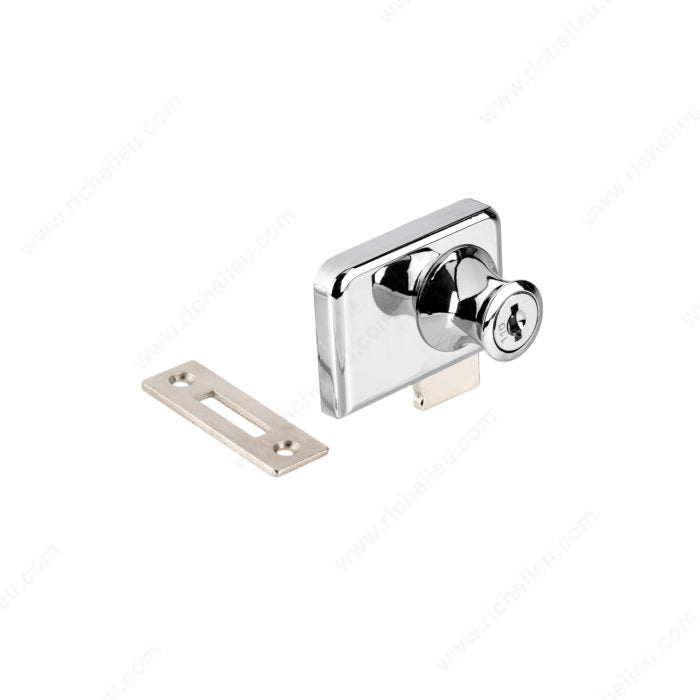
Most non-drilling locks work on wood, laminate, glass, and metal. But some surfaces (like rough wood or textured plastic) don’t hold adhesives well. For glass cabinets, suction cup or magnetic locks are best.
If you have antique or valuable cabinets, test the lock on a small hidden area first. Some finishes are sensitive to adhesives.
A Few Insights Beginners Miss
Many first-time users forget:
- The importance of surface prep: Skipping cleaning is the #1 cause of lock failure.
- Testing before full install: Do a dry run to check alignment and fit.
- Checking door thickness: Magnetic locks won’t work if the door is too thick for the key to reach.
Also, most adhesive locks can be made even stronger by warming the adhesive pad with a hairdryer before sticking.
How To Choose The Right Non-drilling Cabinet Lock
Consider:
- Cabinet type: Handles, knobs, or flat panels?
- Who are you keeping out? : Kids, pets, roommates?
- Security level needed: Simple deterrent or real protection?
- Removability: Do you need to take the lock with you later?
- Budget: Basic straps cost less; smart locks cost more.
If you’re unsure, buy a small pack and test before buying for the whole house.
When To Call A Professional
Most non-drilling locks are DIY-friendly. But if you have special cabinets (curved glass, antique wood, or high-value items), ask a locksmith or cabinet expert for advice. They can recommend the best solution.
Where To Learn More
For more info about cabinet locks, visit the Wikipedia page on locks and keys. You’ll find a history of lock types and more details on mechanical designs.
Frequently Asked Questions
How Long Do Adhesive Cabinet Locks Last?
Most quality adhesive locks last 1 to 3 years with normal use. Humidity, cleaning chemicals, or heavy pulling can shorten their life. Check them every few months and replace if they loosen.
Can I Reuse Non-drilling Cabinet Locks?
Yes, sliding, cable, and suction locks are reusable. For adhesive locks, you can reuse the lock body but may need new adhesive pads. Some brands sell replacement pads.
Are Non-drilling Locks Safe For Antique Cabinets?
Most are safe if you use removable adhesives and avoid strong chemicals. Always test on a hidden spot first. For valuable antiques, suction cup or sliding locks are safest.
What’s The Strongest Non-drilling Cabinet Lock?
Magnetic locks and smart locks offer the best strength for most cabinets. Cable locks with metal cores are also strong. But for high-security needs, drilled locks are still best.
Do Non-drilling Cabinet Locks Damage Furniture?
If installed and removed correctly, most leave no permanent damage. Adhesive residue can be cleaned off. Avoid using on unfinished or delicate surfaces.
Locking a cabinet without drilling is possible for almost every situation. With many types and easy DIY installation, you can keep your home safe—without making a single hole. Choose the method that fits your needs, and you’ll have peace of mind without permanent change.