
If you love baking, you probably own several baking pans in different shapes and sizes. Over time, these pans can quickly take over your kitchen cupboards, turning tidy shelves into cluttered chaos. You might find yourself searching for a muffin tin stuck behind a roasting pan or struggling to close a drawer because of misplaced cookie sheets.
Getting your baking pans organized is not just about aesthetics—it saves time, protects your bakeware, and makes your kitchen more enjoyable to use.
Organizing baking pans may seem simple, but the variety in size, material, and shape often makes it a complex task. From classic round cake pans to large sheet trays, each type requires a slightly different solution. Many people overlook simple tricks that can double the space and make their pans easier to reach.
This article explores practical, easy-to-follow methods to organize baking pans, whether you have a spacious kitchen or a compact apartment. You’ll learn about smart storage solutions, maintenance tips, and how to keep your system working for the long term. If you’re ready to reclaim your kitchen and find every pan at a glance, read on.
Understanding Your Baking Pan Collection
Before you start organizing, take time to understand what you have. Many people accumulate baking pans over years, often forgetting what’s buried at the back of a cabinet. Start by gathering all your pans and laying them out on a clean surface.
This step alone can be eye-opening—you might find duplicates or pans you never use.
Look at the following categories:
- Sheet pans (cookie sheets, jelly roll pans)
- Cake pans (round, square, springform)
- Muffin tins
- Loaf pans
- Pie plates
- Specialty pans (Bundt, tart, madeleine)
- Cooling racks and related accessories
As you sort, ask yourself:
- Do you use all these pans regularly?
- Are there any damaged or rusted pans?
- Do you have multiple pans that serve the same purpose?
This is the best time to donate or recycle pans you don’t need. Most kitchens only need one or two of each basic pan. Letting go of extras creates space for more efficient organization.
Choosing The Right Storage Space
The next step is to choose where your baking pans should live. The best spot depends on your kitchen layout, how often you bake, and the space available.
Common Storage Locations
- Lower cabinets: Many kitchens have a deep lower cabinet perfect for vertical pan storage.
- Upper cabinets: Good for lighter pans or less-used specialty pieces.
- Drawers: Wide, shallow drawers can fit several pans if organized well.
- Pantries: If you have a walk-in pantry, dedicate a section for bakeware.
- Wall-mounted racks: Useful in small kitchens where cabinet space is tight.
- Oven storage: Some people store pans in the oven, but this can be a hassle if you use your oven often.
When choosing, think about accessibility. Store your most-used pans where you can easily reach them without moving other items. Less-used pans can go in harder-to-reach spots.
Vertical Vs. Horizontal Storage
How you store your pans matters as much as where you store them. The two main methods are vertical and horizontal storage.
Vertical Storage
Pans stand upright, like books on a shelf. This method saves space and makes it easy to grab what you need. It works especially well for flat pans like cookie sheets and cooling racks.
Horizontal Storage
Pans stack on top of each other. This is common but can be frustrating—you may have to lift several pans to get the one you need. Horizontal stacking works best for deep pans (like cake or loaf pans) that nest neatly.
Here’s a quick comparison:
| Storage Method | Best For | Pros | Cons |
|---|---|---|---|
| Vertical | Flat pans, cooling racks, trays | Easy access, maximizes space | Needs dividers or racks |
| Horizontal | Nesting pans, deep pans | Simple, no extra tools needed | Harder to access bottom pans |
For most kitchens, a mix of both methods works best.
Organizing Tools And Accessories
To keep pans neat and prevent damage, use the right organizing tools. Many people skip this step, but a small investment here makes a big difference.
Essential Organizing Accessories
- Pan racks: These stand upright in cabinets and hold pans vertically, separating each piece.
- Expandable dividers: Adjustable to fit your cabinet or drawer, keeping pans from sliding together.
- Pull-out shelves: Installed in cabinets for easy access—no more reaching into dark corners.
- Wire organizers: Inexpensive and widely available, great for sheet pans and trays.
- Drawer inserts: Custom-fit organizers that hold pans and lids in place.
- Baking pan caddies: Portable holders for stacking several pans together.
- Wall-mounted racks: Free up cabinet space, especially in small kitchens.
- Pegboards: Hang pans on hooks for a creative, flexible solution.
- Tension rods: Place inside cabinets to create vertical slots for pans.
- Under-shelf baskets: Clip onto existing shelves to add space for thin items.
When choosing accessories, measure your space carefully. The most common mistake is buying organizers that don’t fit your cabinets or drawers.
Step-by-step Guide To Organizing Baking Pans
Now let’s get practical. Here’s a step-by-step approach for organizing your baking pans, whether you have a large kitchen or a small apartment.
1. Empty And Clean
Clear out all pans and clean your storage area. Wipe down shelves and vacuum drawers to remove crumbs and dust.
2. Sort By Type And Size
Group similar pans together. Keep all sheet pans in one stack, cake pans in another, and so on. Within each group, arrange by size—smallest to largest.
3. Decide What To Keep
Be honest. If you haven’t used a pan in over a year, consider donating it. Damaged pans can sometimes be recycled.
4. Choose A Storage Solution
Pick vertical racks for flat pans, drawer inserts for deep pans, and wall racks for specialty pieces. Remember, accessibility is key.
5. Arrange By Frequency Of Use
Put the pans you use most often in the front or at the top. Store special-occasion pans in the back or higher up.
6. Label When Necessary
If you store pans out of sight (like in deep drawers or high cabinets), use labels to help you find what you need quickly.
7. Maintain Your System
Once your pans are organized, keep them that way by returning each item to its place. Review your collection every 6–12 months.
Organizing Pans In Small Kitchens
Small kitchens need creative solutions. You might not have a spare cabinet, but you can still keep your pans organized.
- Use vertical space: Install wall-mounted racks or pegboards.
- Try over-the-door organizers: Hang pans on the inside of a pantry or cabinet door.
- Store pans inside the oven: This works if you don’t use your oven for storage while cooking.
- Invest in multi-purpose organizers: Look for racks that hold both pans and lids.
- Go portable: Use caddies or baskets that you can move as needed.
- Declutter regularly: Small kitchens can’t afford unused items taking up space.
One non-obvious tip: Store your most-used pan on the counter or stovetop for quick access. Just keep it clean and put it away when guests come.
Organizing Pans In Large Kitchens
With a bigger kitchen, you have more options but also more risk of clutter. Use your space wisely:
- Dedicate a cabinet: Reserve a whole section just for baking pans and accessories.
- Install pull-out shelves: Make deep cabinets easy to use.
- Zone your storage: Group pans by type (e.g., all cake pans together).
- Use island storage: Many kitchen islands have deep drawers perfect for large pans.
- Hang from a pot rack: If you have high ceilings, display specialty pans above your island.
A common mistake in large kitchens is spreading pans out too much, making it hard to find things. Keep them together for efficiency.
Storing Specialty And Odd-shaped Pans
Bundt pans, tart molds, and other specialty items can be hard to fit with standard bakeware. Here are solutions that work:
- Hang on hooks: Use wall or cabinet hooks for oddly shaped pans.
- Store in baskets: Group small specialty pans in baskets or bins inside cabinets.
- Vertical dividers: Separate fluted or deep pans in upright slots.
- Stack carefully: Place a paper towel between nonstick pans to prevent scratches.
For items like springform pans, keep all pieces together in a resealable bag or box so nothing gets lost.

Credit: www.roomsneedlove.com
Preventing Damage And Prolonging Pan Life
Proper storage isn’t just about neatness—it protects your investment. Scratches, dents, and rust can ruin bakeware.
Tips to protect pans:
- Never stack nonstick pans directly on top of each other. Use a soft cloth or liner between them.
- Store glass and ceramic pans upright with plenty of padding.
- Don’t overload drawers; heavy stacks can bend metal pans.
- Avoid moisture; dry pans completely before storing to prevent rust.
- For cast iron, apply a thin layer of oil before storing.
Remember, good organization also means caring for your pans.
Maximizing Space With Multi-use Organizers
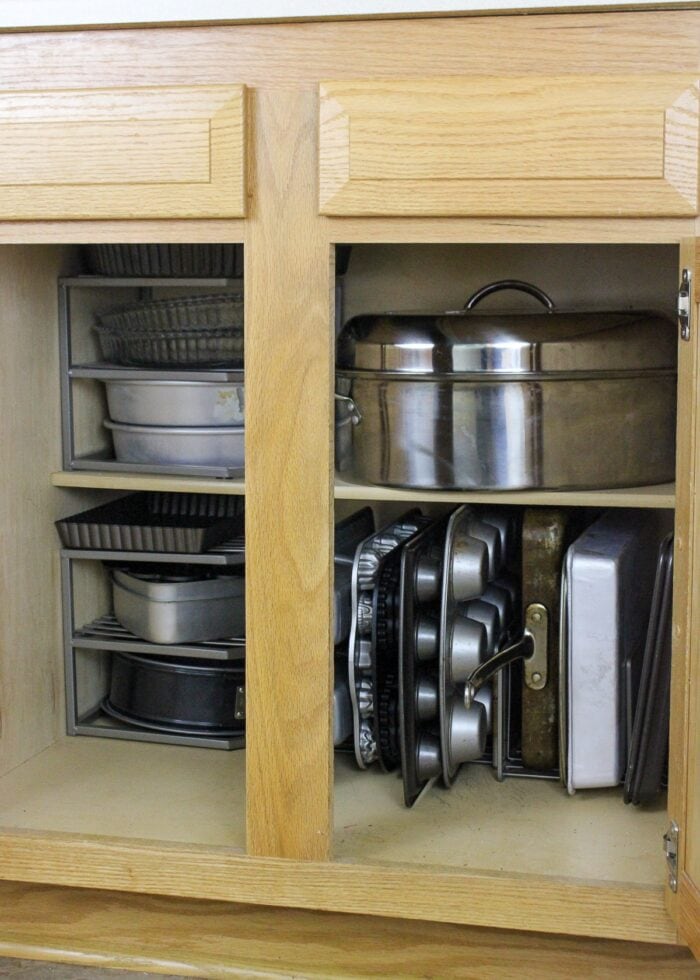
If you want to make the most of your space, choose organizers that serve more than one purpose. For example, a rack with adjustable dividers can hold pans, lids, and cutting boards all in one place.
Here’s a comparison of common multi-use organizers:
| Organizer Type | Holds Pans? | Holds Lids? | Fits Drawers? | Wall-Mountable? |
|---|---|---|---|---|
| Adjustable rack | Yes | Yes | Yes | No |
| Wire organizer | Yes | No | Yes | No |
| Pegboard | Yes | Yes | No | Yes |
| Under-shelf basket | Yes | Yes | No | No |
Choosing flexible organizers allows you to adapt as your collection changes.
Credit: thehomesihavemade.com
Organizing Baking Pan Lids And Accessories
Lids and small accessories, like cooling racks or silicone mats, need their own solution. Many people overlook these, leading to clutter.
- Use magazine holders: Store lids upright in a cheap plastic or metal holder.
- Try drawer dividers: Keep racks and mats from sliding around.
- Hang on cabinet doors: Attach hooks or pockets for small items.
- Store with their pan: Keep lids and accessories together for easy access.
A smart tip: If you often lose small pieces (like clips for springform pans), store them in a labeled zip bag.
Keeping Your System Working Long Term
Organizing is not a one-time task. To keep your kitchen tidy:
- Review your pans every few months.
- Put pans back in their place after each use.
- Adjust your system if your needs change (new pans, new organizers).
- Teach family members where each pan belongs.
Setting a reminder to check your kitchen every season can help prevent clutter from returning.
Common Mistakes In Organizing Baking Pans
Many people make these errors:
- Overcrowding a single cabinet, making it hard to reach pans.
- Forgetting to measure cabinets and organizers before buying tools.
- Stacking nonstick pans without protection, causing scratches.
- Storing rarely used specialty pans with everyday items.
- Ignoring the importance of regular decluttering.
Avoiding these mistakes will help your system last.
Creative Ideas For Organizing Baking Pans
Don’t be afraid to try unique solutions. Here are some creative ideas:
- Use a dish drying rack: Instant vertical organizer for pans.
- Repurpose office organizers: Letter trays and file holders work well for flat pans.
- Install sliding baskets: Add them to shelves for easy pull-out access.
- Hang pans above the stove: If space allows, display beautiful pans as decor.
- Add shelving inside doors: Perfect for thin pans and trays.
- DIY tension rod dividers: Create custom vertical slots in a cabinet.
- Use command hooks: Hang lightweight pans or accessories inside doors.
These ideas can give your kitchen a personal touch.
How Organization Improves Baking
A well-organized kitchen does more than look nice. It makes baking easier and more enjoyable:
- Saves time: Find the pan you need instantly.
- Prevents damage: Pans last longer when stored correctly.
- Reduces stress: Less searching means more baking.
- Improves safety: No more reaching into messy cabinets.
- Inspires creativity: A tidy space encourages you to bake more often.
A non-obvious benefit: If you bake with kids, organized pans let them help choose and put away pans, making baking more fun for everyone.
Real-life Examples And Data
A survey by the National Kitchen & Bath Association found that over 60% of homeowners struggle with kitchen organization, especially when it comes to bakeware and cookware. In another study, people who organized their kitchen reported spending 30% less time preparing meals and cleaning up.
For example, a home baker in New York shared that after installing vertical pan dividers, she cut her baking prep time from 15 minutes to just 5 minutes. Another family used a pegboard wall to store all their specialty pans and said they finally stopped buying duplicates.
These stories show that small changes can bring big results.
Eco-friendly And Sustainable Organization Tips
If you care about the environment, you can organize your pans in a green way:
- Donate or recycle old pans instead of throwing them away.
- Choose bamboo or recycled organizers for dividers and racks.
- Avoid plastic when possible, as it can crack and waste space.
- Upcycle old baskets or crates for storage.
- Buy quality over quantity: Fewer, better pans mean less clutter and waste.
Sustainable organization benefits your kitchen and the planet.
When To Upgrade Your Organization System
Sometimes your needs change. How do you know when it’s time to upgrade?
- You’ve bought new pans and run out of space.
- Your current system is hard to use or falling apart.
- You’re constantly searching for pans or lids.
- Pans are getting damaged in storage.
If any of these sound familiar, invest in new organizers or re-think your layout.

Credit: www.roomsneedlove.com
Getting Family Involved
A successful organization system works best when everyone in the home helps out. Here’s how to involve your family:
- Label shelves or drawers: Make it clear where each type of pan belongs.
- Show everyone the system: Give a quick tour after you finish organizing.
- Assign tasks: Let kids help put pans away after baking.
- Ask for input: Family members may have ideas you haven’t considered.
Teamwork keeps your kitchen running smoothly.
Storing Pans For Special Occasions
Some pans only come out once a year—like holiday cookie cutters or a turkey roasting pan. Store these in a labeled bin or high shelf, separate from everyday pans. This frees up space and makes your kitchen less cluttered.
A practical tip: Make a list of what’s in each bin and tape it to the outside, so you don’t have to dig through boxes when you need a special pan.
Digital Tools For Organization
Today, even kitchen organization can use a tech boost. Try these digital tools:
- Inventory apps: Track what pans you own and when you last used them.
- Photo catalogs: Take pictures of organized cabinets as a reference.
- Reminder apps: Set alerts to declutter or clean your pans regularly.
These tools help you stay organized, even if you’re busy.
Frequently Asked Questions
How Do I Prevent Nonstick Pans From Scratching In Storage?
Always place a soft cloth, paper towel, or pan protector between nonstick pans before stacking them. This simple step prevents scratches and keeps the nonstick surface working longer.
What’s The Best Way To Organize Baking Pans In A Small Apartment?
Use vertical space—install wall racks or pegboards if you can. Over-the-door organizers and under-shelf baskets are also great for tight spaces. Only keep the pans you use regularly to avoid clutter.
Can I Store Baking Pans In The Oven?
Yes, you can store pans in the oven if you don’t use it often. Just remember to remove all pans before preheating. Consider this option only if you have no other space.
How Often Should I Declutter My Baking Pans?
Review your collection every 6 to 12 months. Donate or recycle pans you don’t use. Decluttering regularly keeps your kitchen tidy and makes it easier to find what you need.
Where Can I Find High-quality Pan Organizers?
Pan organizers are available at kitchen stores, online retailers, and home improvement shops. For product reviews and storage ideas, see Good Housekeeping.
Organizing your baking pans may take a little time and effort, but the rewards are worth it. With a clear plan, the right tools, and a commitment to tidy habits, your kitchen will stay neat, efficient, and ready for your next baking adventure.
Whether you bake every week or just for special occasions, a well-organized pan collection makes all the difference.