
Seasoning a wok is a tradition rooted in Asian cooking, but it can feel mysterious if you’re new to it. Many people worry about sticky surfaces, rust, or why their stir-fries taste dull. The truth is, properly seasoning your wok is the secret behind non-stick cooking, rich flavors, and a beautiful, black patina that gets better with every use.
While stove-top seasoning is common, using your oven offers a more even, hassle-free process—especially for beginners. You might have read about it, but doing it well requires more than just coating with oil and heating. Let’s walk through everything you need to know to season a wok in the oven, avoid common mistakes, and enjoy effortless cooking for years.
Why Season A Wok?
Woks are usually made from carbon steel or cast iron, both of which can rust and stick if left untreated. Seasoning means creating a thin, baked-on layer of oil that protects the metal and forms a natural non-stick surface. This process does more than stop food from sticking—it adds flavor, resists rust, and helps your wok develop a unique cooking surface called a patina. Without seasoning, your wok will likely rust, food will stick, and you’ll miss out on the special taste that only a well-seasoned wok can bring.
What You Need Before You Start
Before seasoning, gather a few basic tools. Missing these can lead to uneven seasoning or even damage to your wok.
- New or used carbon steel or cast iron wok (make sure it’s oven-safe)
- High-smoke point oil (like flaxseed, grapeseed, or canola oil)
- Paper towels or lint-free cloth
- Tongs (helpful for handling hot parts)
- Dish soap and scrubber
- Aluminum foil (for oven racks)
- Oven mitts or heat-resistant gloves
- Good ventilation (open windows or use an exhaust fan)
If your wok has plastic or wooden handles, check if they’re removable. If not, the oven method may not be safe for your wok.
Credit: www.hungrylankan.com
Choosing The Right Oil For Seasoning
Not all oils are equal when it comes to seasoning. The oil should have a high smoke point so it doesn’t burn at oven temperatures, and it should polymerize well (form a hard, protective layer).
Here’s a comparison of common oils for wok seasoning:
| Oil Type | Smoke Point (°F) | Polymerization Quality | Flavor Impact |
|---|---|---|---|
| Flaxseed oil | 225 | Excellent | Neutral |
| Grapeseed oil | 420 | Very Good | Neutral |
| Canola oil | 400 | Good | Neutral |
| Vegetable oil | 400-450 | Good | Neutral |
| Peanut oil | 450 | Good | Mild |
| Olive oil | 375 | Fair | Distinct |
Flaxseed oil is popular because it polymerizes into a hard layer, but it can flake if used too thickly. Grapeseed and canola oil are easier to use and less likely to cause issues.
Preparing Your Wok For Seasoning
A new wok usually comes with a protective factory coating (often a clear lacquer) to prevent rust during shipping. This coating must be removed, or your seasoning will not bond to the metal.
- Scrub thoroughly: Wash with hot water, a little dish soap, and a scrubber. Don’t worry about using soap this one time—you need to remove everything, including factory oil.
- Rinse well: Make sure all soap and residue are gone.
- Dry completely: Water left on the surface will cause rust. Dry with paper towels, then heat the wok briefly on the stovetop to evaporate any last drops.
- Check handles: If your wok has wooden or plastic handles, remove them if possible. Metal handles can go in the oven.
A non-obvious tip: If your wok is second-hand and has rust, scrub with steel wool until all rust is gone, then repeat the cleaning steps above.
The Oven Seasoning Process Step-by-step
Seasoning a wok in the oven is straightforward but requires attention to detail. Here’s how to do it right:
Step 1: Preheat Your Oven
Set your oven to 450°F (230°C). This high heat is necessary to polymerize the oil into a hard, non-stick layer. Allow the oven to fully preheat—don’t rush this step.
Step 2: Line The Oven
Place a large sheet of aluminum foil on the bottom rack of your oven. This will catch any oil drips and prevent smoke or mess.
Step 3: Apply A Thin Coat Of Oil
Pour a small amount of your chosen oil onto a paper towel or cloth. Rub it all over the inside and outside of the wok. The layer should be as thin as possible—wipe until the surface looks just slightly shiny, with no puddles or drips.
Why thin layers matter: Thick oil creates sticky spots and uneven seasoning. Thin coats allow the oil to bond properly.
Step 4: Remove Excess Oil
After rubbing, use a clean paper towel to wipe off any visible oil. The wok should not feel oily to the touch.
Step 5: Place Wok Upside Down In Oven
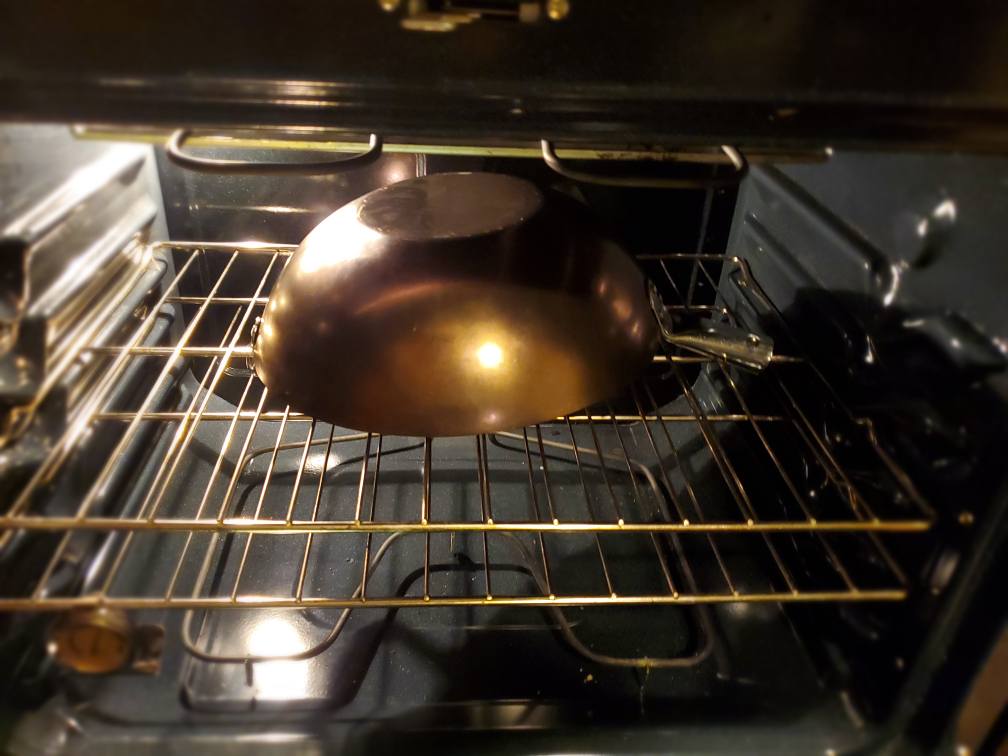
Put the wok upside down on the top oven rack, above the foil. This prevents excess oil from pooling inside and helps oil coat the outside evenly.
Step 6: Bake For 1 Hour
Close the oven and let the wok bake for 1 hour. This is when the oil changes from liquid to a hard, dark layer.
Step 7: Cool Down In Oven
Turn off the oven and let the wok cool inside for 15-30 minutes. This prevents sudden temperature changes that can warp the metal or crack the seasoning.
Step 8: Repeat For More Layers
For the best non-stick surface, repeat steps 3-7 2 to 4 times. Each thin layer builds up a stronger, more protective finish. After the first layer, you’ll notice the wok becoming darker.
Step 9: Final Inspection
After the last bake and cool, check your wok. It should have a deep brown or black color, feel smooth, and not sticky. If you see sticky spots, wipe with a dry cloth and bake again without adding more oil.
Common Mistakes And How To Avoid Them
Even experienced cooks make mistakes seasoning woks. Here are some common errors and how to avoid them:
- Using too much oil: This creates sticky or uneven layers. Always apply the thinnest coat possible.
- Not removing factory coating: If you skip the deep cleaning, your seasoning will not bond and may flake off.
- Seasoning with flavored or low-smoke point oils: Butter, sesame oil, or extra-virgin olive oil will burn or create odd flavors.
- Not drying completely: Water left on the wok causes rust under the seasoning layer.
- Rushing cooling: Taking the wok out of the oven while hot can warp it or crack the seasoning.
- Not removing handles: Wooden or plastic handles can burn or melt in the oven.
- Ignoring sticky patches: If you get sticky areas, don’t add more oil. Bake the wok empty to harden or wipe off the stickiness.
A non-obvious insight: If your seasoning flakes after cooking acidic foods (like tomatoes), don’t panic. Just scrub, dry, and apply another thin layer of oil before baking again.
How Oven Seasoning Compares To Stove-top Seasoning
Both methods work, but the oven method has unique strengths and some limitations. Here’s a side-by-side comparison:
| Feature | Oven Seasoning | Stove-Top Seasoning |
|---|---|---|
| Evenness | Very Even | Can be Patchy |
| Mess/Smoke | Contained in Oven | Smoke and Oil Splatter |
| Time Required | 1-3 hours (including repeats) | 30-60 min |
| Handles | Must be oven-safe | Any handles |
| Effort | Hands-off, easy | Needs attention, stirring oil |
| Best for | New woks, beginners | Touch-ups, experienced cooks |
The oven method is more forgiving and usually gives a smoother finish, especially on the outside. However, if your wok is too large for your oven or has non-removable wooden handles, stove-top seasoning may be your only option.
How To Maintain Your Seasoned Wok
Seasoning is not a one-time job. Regular use and maintenance will help your wok become even more non-stick and flavorful over time.
Cleaning After Each Use
- Avoid soap: Use hot water and a soft sponge. Soap can remove the seasoning.
- Remove stuck food: For stubborn bits, scrub with a bamboo brush or a non-metal pad. Never use steel wool on a seasoned wok.
- Dry thoroughly: Place the wok on the stove over low heat until all water evaporates.
- Lightly oil: After drying, wipe a thin layer of oil onto the surface to keep the seasoning strong.
What To Avoid
- Don’t soak: Prolonged soaking can cause rust under the seasoning.
- Don’t cook acidic foods often: Tomatoes or vinegar can strip the seasoning.
- Don’t store food in the wok: The moisture and acids in food can weaken the seasoned layer.
When To Reseason
If food starts to stick, the color fades, or you see rust, it’s time to reseason. Simply repeat the oven process with thin layers of oil.

Credit: mammafong.com
Troubleshooting: Sticky, Flaky, Or Patchy Seasoning
Even with the right steps, problems can happen. Here’s how to fix common seasoning issues:
- Sticky Surface: This means too much oil was used. Bake the wok in the oven at 450°F without adding more oil to harden the sticky spots.
- Flaking: Usually from poor initial cleaning or thick oil layers. Scrub off the flakes, wash, dry, and start the seasoning process again with thin coats.
- Rust: Remove with a scrubber or steel wool, wash, dry, and reseason.
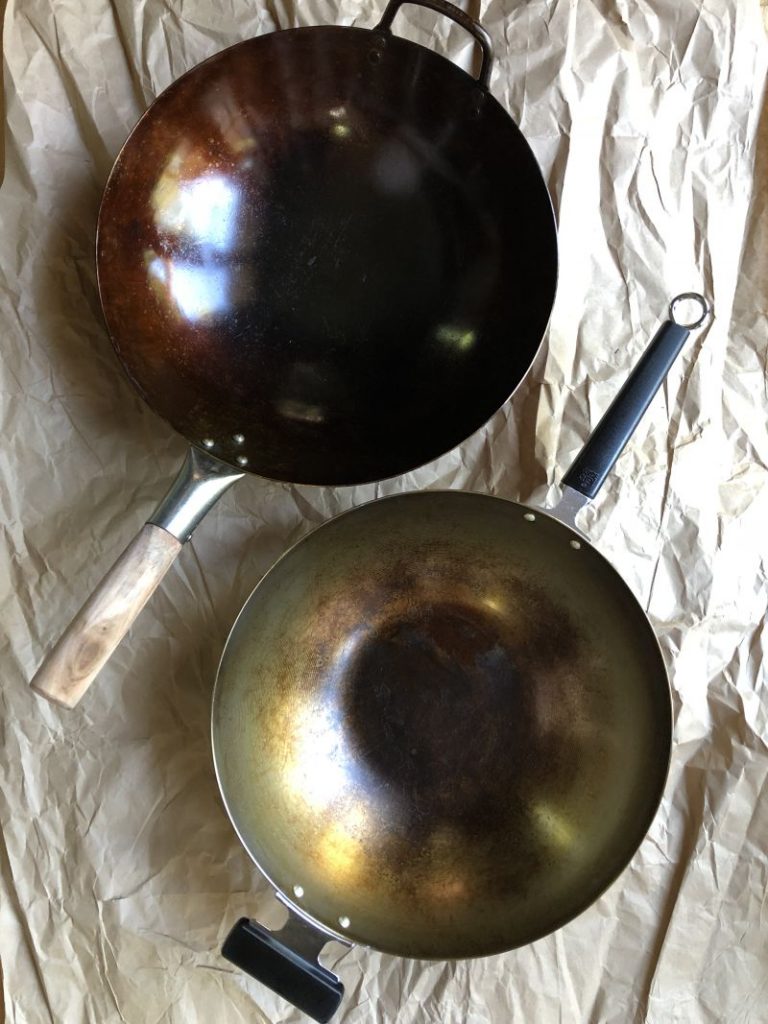
- Uneven Color: This is normal after the first few seasonings. The patina will even out with use.
If your seasoning gets damaged, don’t worry. Woks are very forgiving—just clean, dry, and season again. Over time, your wok will develop a beautiful, dark finish that’s unique to you.
How Long Does It Take To Season A Wok In The Oven?
The actual baking time is about 1 hour per layer, plus time to apply oil and cool. Most cooks apply 2 to 4 layers, so plan for 2-4 hours total if you want a deep, durable finish on day one. However, even one good layer is enough to start cooking.
Here’s a sample timeline for seasoning:
| Step | Time (min) | Total Elapsed |
|---|---|---|
| Deep cleaning and drying | 15 | 15 |
| Apply first oil layer | 5 | 20 |
| Bake (1st layer) | 60 | 80 |
| Cool in oven | 20 | 100 |
| Repeat for 2nd-4th layer | 85 (per layer) | Up to 355 |
If you’re short on time, one or two layers are enough to start stir-frying, and the patina will improve each time you cook with oil.
Credit: www.vietworldkitchen.com
The Science Behind Wok Seasoning
Seasoning is more than just oil drying on metal. When you heat oil past its smoke point, the fat molecules break down and bond to the metal in a process called polymerization. This creates a hard, plastic-like layer that resists sticking and rust.
A seasoned wok is not truly non-stick like Teflon, but the more you use it, the smoother and more non-stick it becomes. This is why old woks are so prized: decades of seasoning build up a surface that’s perfect for high-heat cooking and adds subtle flavors to every dish.
Cooking With Your Newly Seasoned Wok
Once your wok is seasoned, you can start cooking. For the first few uses, stick to oil-rich dishes like stir-fries, deep-frying, or sautéing. These dishes help build the patina. Avoid steaming, boiling, or using acidic ingredients until the seasoning is well established.
Some good first dishes:
- Stir-fried vegetables with garlic and ginger
- Egg fried rice
- Deep-fried tofu or chicken
- Beef or shrimp stir-fry
After each use, remember to clean gently and add a thin layer of oil.
Cultural Insights: Why Seasoning Matters In Asian Kitchens
In many Asian cultures, a wok is more than just cookware—it’s a family heirloom. The patina that develops over years of seasoning is believed to add unique flavors that can’t be copied. Chefs judge a wok by its color and smoothness. A shiny, black wok is a sign of experience and care.
Wok seasoning is also a practical tradition: it allows cooks to use high heat without fear of burning food or damaging the pan. This is why even in modern kitchens, hand-seasoned woks are valued over non-stick pans.
Environmental And Health Considerations
Seasoning a wok uses natural oil and high heat instead of synthetic non-stick chemicals. The seasoned layer is safe for high-heat cooking and does not release harmful fumes. In fact, many people prefer seasoned carbon steel or cast iron for both environmental and health reasons.
A well-seasoned wok can last for decades, reducing waste from disposable non-stick pans. If you care about sustainability, wok seasoning is a tradition worth keeping.
Tips For Advanced Users
Once you’re comfortable with basic seasoning, you can try these advanced tips:
- Experiment with different oils: Some chefs use a mix of oils to balance hardness and flavor.
- Season on the stove after oven seasoning: A quick stir-fry with scallions and ginger after oven seasoning can add extra aroma and smoothness.
- Reseason only problem spots: If one area sticks, you can touch up just that spot instead of reseasoning the whole wok.
- Store in a dry place: Humid kitchens can lead to rust—keep your wok dry and lightly oiled.
Where To Learn More
For readers interested in the science of seasoning or the history of wok cooking, the Wikipedia entry on woks is a good resource.
Frequently Asked Questions
How Often Should I Season My Wok?
After the initial seasoning, you don’t need to repeat the whole process unless the seasoning gets damaged or food starts sticking. With regular use and proper cleaning, your wok’s patina will improve naturally. If you notice rust, dullness, or sticky spots, repeat the oven seasoning.
Can I Season A Non-stick Or Stainless Steel Wok In The Oven?
No, this method is for carbon steel or cast iron woks only. Non-stick coatings can be damaged by high heat, and stainless steel does not develop a non-stick patina like carbon steel.
Is It Safe If My Wok Smokes During Seasoning?
Yes, light smoke is normal and expected as the oil polymerizes. However, open windows or use a fan for ventilation. If you see thick, black smoke, you may have used too much oil—wipe off excess and try again with a thinner layer.
What If My Wok Gets Rusty After Seasoning?
Rust can happen if the wok stays wet or is not used often. Scrub the rust off with steel wool, wash, dry, and reseason. Keeping the wok dry and lightly oiled prevents rust.
Why Is My Seasoning Uneven Or Patchy?
Patchy seasoning is common after the first few layers. It will even out with use, especially if you cook oil-rich foods. Don’t worry—regular cooking and occasional touch-ups will soon create a smooth, dark finish.
A well-seasoned wok is the heart of great stir-fries and Asian dishes. With patience and the right steps, seasoning your wok in the oven can transform your cooking and connect you to a centuries-old tradition. Now you’re ready to cook with confidence and enjoy the unique flavors only a seasoned wok can bring.