
Curry leaves are a staple in South Asian and Southeast Asian kitchens. Their unique aroma and flavor transform everyday dishes into something special. But if you buy or pick more curry leaves than you can use right away, you’ll quickly notice something: they don’t last long in open air. In just a few days, they wilt, lose their punch, and may even turn black or moldy. So, how do you keep curry leaves fresh, green, and flavorful for weeks or even months? This guide explores all the best ways to store curry leaves, with practical advice, mistakes to avoid, and expert tips that go beyond the basics.
Whether you use curry leaves every day or only occasionally, knowing how to store them saves money, reduces waste, and ensures your food always tastes its best. Let’s dive into the science, methods, and real-world solutions for storing curry leaves for both short and long terms.
You’ll discover not only how to keep them fresh but also how to maintain their aroma and nutrition. If you’ve ever wondered if freezing, drying, or using oil is better, or why your leaves go bad even in the fridge, you’ll find clear answers here.
Why Proper Storage Of Curry Leaves Matters
Curry leaves are not just for flavor. They are packed with antioxidants, vitamins, and minerals like iron, calcium, and vitamin C. They are used for tempering, garnishing, and even medicinal purposes in Ayurveda. But their delicate structure means they spoil quickly if not handled correctly. Improper storage leads to:
- Loss of flavor and aroma
- Discoloration (yellowing or black spots)
- Texture changes (wilting or sliminess)
- Mold or bacterial growth
If you want your curries, dals, and rice dishes to always have that signature taste, it’s essential to keep your curry leaves in top condition. Proper storage also preserves the nutritional value, which is especially important if you use them as a health supplement.
Choosing And Preparing Curry Leaves For Storage
Storing curry leaves starts before you even put them away. The condition in which you buy or harvest them affects their shelf life dramatically.
Selecting Fresh Curry Leaves
Look for these signs of quality:
- Bright green color: Avoid leaves with yellow, brown, or black spots.
- Firm texture: Leaves should not be limp or wilted.
- No moisture: Wet or sweaty leaves spoil faster.
- No strong odor: Fresh leaves have a mild, herbal aroma. Sour or musty smells signal decay.
If you have a curry leaf plant at home, pick leaves in the morning when they’re most hydrated.
Cleaning And Drying
Before storing, always remove:
- Stems (unless you plan to use them soon)
- Damaged or discolored leaves
- Any debris or dirt
Wash gently under cold water if needed, but always dry thoroughly. Moisture is the enemy of long-term storage.
Pro tip: Lay leaves in a single layer on a clean kitchen towel or paper towel. Pat dry and air-dry for 15-20 minutes until no water droplets remain.
Storing Curry Leaves In The Refrigerator
One of the most common ways to store curry leaves for a week or two is to use the refrigerator. But the method makes all the difference.
Basic Fridge Storage
If you just toss curry leaves in a plastic bag, you’ll notice black spots or slimy textures after a few days. Here’s how to do it right:
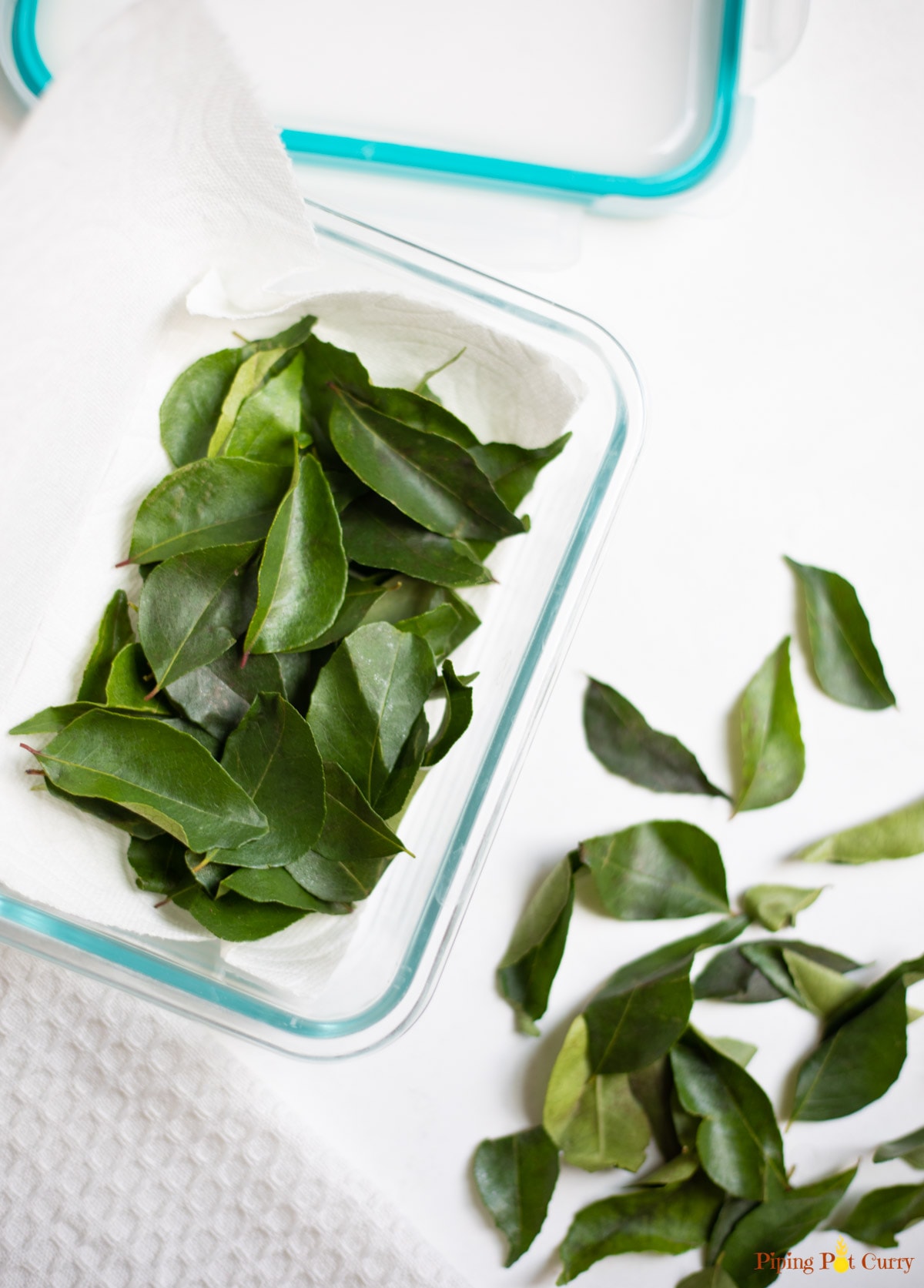
- Wrap the clean, dry leaves in a paper towel. The towel absorbs excess moisture.
- Place the wrapped leaves inside an airtight container or a zip-lock bag. Squeeze out as much air as possible.
- Store in the vegetable crisper section of your fridge.
With this method, curry leaves stay fresh for up to 2-3 weeks.
Extended Refrigerator Storage (with Special Tricks)
For even longer life (up to 4-5 weeks), add these steps:
- Add a fresh paper towel every week. Replace if you see it’s damp.
- Use a hard plastic box instead of a soft bag to prevent leaves from being crushed.
- For large batches, store in small portions. Opening the container repeatedly exposes all leaves to air, shortening shelf life.
Comparing Refrigerator Storage Methods
Here’s a quick comparison of common fridge methods:
| Method | Expected Freshness | Best For | Downsides |
|---|---|---|---|
| Loose in plastic bag | 3-4 days | Immediate use | Wilting, black spots |
| Paper towel + container | 2-3 weeks | Weekly cooking | Requires regular checking |
| Paper towel + box, change towel weekly | 4-5 weeks | Bulk storage | Extra steps needed |
Non-obvious insight: Never store curry leaves near ethylene-producing fruits like apples or bananas. Ethylene gas speeds up decay.
Freezing Curry Leaves
Freezing is the best way to keep curry leaves for several months. But it’s not as simple as just tossing leaves in the freezer.
How To Freeze Curry Leaves (whole Leaves)
- Wash and dry the leaves thoroughly.
- Remove stems and damaged leaves.
- Spread leaves in a single layer on a tray. Freeze for 1-2 hours (this prevents clumping).
- Transfer frozen leaves into an airtight freezer bag or container. Remove as much air as possible.
- Label with the date and store in the freezer.
Frozen curry leaves last up to 6 months with minimal loss of flavor.
Freezing In Small Packs
For convenience, freeze in small packs:
- Divide leaves into small portions (enough for one use)
- Wrap each portion in a small piece of cling film or foil
- Place all wrapped packs in a large freezer bag
This way, you only thaw what you need and avoid repeated freezing/thawing.
Freezing Curry Leaf Paste Or Chutney
If you use curry leaves for chutneys or herbal pastes, freeze them blended:
- Blend washed, dried leaves with a splash of water or oil.
- Pour paste into ice cube trays.
- Once frozen, transfer cubes to a freezer-safe bag.
Each cube equals a handful of fresh leaves and can be used directly in dishes.
Pros And Cons Of Freezing
| Freezing Method | Flavor Retention | Texture After Thawing | Best Use |
|---|---|---|---|
| Whole leaves | Very good | Slightly soft, not crisp | Tempering, curries |
| Paste/chutney | Good | Smooth, blended | Chutneys, marinades |
Expert tip: Don’t wash frozen leaves when thawing. Use directly in hot oil or dishes to preserve flavor.
Credit: pipingpotcurry.com
Drying Curry Leaves For Long-term Storage
If you want to store curry leaves without a freezer, drying is your best option. Dried leaves last for months and are easy to use.
Air Drying
- Wash and dry leaves.
- Spread in a thin layer on a clean towel or tray, away from direct sunlight.
- Allow to air dry for 2-3 days, turning occasionally.
- Once crisp, store in an airtight jar or container.
Air-dried leaves retain much of their aroma but may lose some color.
Sun Drying
If you live in a warm climate:
- Place leaves on a tray in a shaded, well-ventilated area (direct sun may bleach color)
- Dry for 1-2 days until crisp
Sun drying is fast but can sometimes dull the flavor.
Oven Or Dehydrator Drying
For faster results:
- Preheat oven or dehydrator to 40-50°C (104-122°F)
- Spread leaves in a single layer on a baking sheet
- Dry for 1-2 hours, checking every 30 minutes
Oven drying is good for rainy climates or quick batches.
Storing Dried Leaves
Once dried:
- Store in an airtight glass jar away from heat, light, and moisture
- Label the container with the date
Dried curry leaves can last up to a year. Crush or powder them before adding to dishes.
Comparing Drying Methods
| Drying Method | Flavor | Color | Shelf Life |
|---|---|---|---|
| Air drying | Good | Greenish | 10-12 months |
| Sun drying | Moderate | Pale | 8-10 months |
| Oven/dehydrator | Excellent | Bright green | 12 months |
Non-obvious insight: Store dried leaves whole, not crushed. They keep their aroma better and can be crushed just before use.
Storing Curry Leaves In Oil Or Ghee
For a quick way to flavor dishes and preserve leaves, try infusing curry leaves in oil or ghee.
Curry Leaves In Oil
- Wash and dry leaves.
- Heat oil (mustard, coconut, or sunflower oil) in a pan.
- Add the leaves and fry for 30 seconds until crisp but not burnt.
- Cool, then transfer both oil and leaves to a clean glass jar.
- Store in the fridge.
The oil absorbs the flavor and can be used for tempering, while the leaves become crispy and aromatic.
Curry Leaves In Ghee
Same method as above, but use ghee instead of oil for a richer flavor.
- Ghee preserves leaves even longer due to its low moisture content.
Benefits And Drawbacks
- Benefits: Instant flavor, longer shelf life, easy to use
- Drawbacks: Adds fat to dishes, not suitable for all recipes
Pro tip: This method is great for people who cook South Indian dishes often.
Storing Curry Leaves As A Powder
If you want a ready-to-use seasoning, curry leaf powder is a handy solution.
How To Make Curry Leaf Powder
- Dry the leaves using one of the methods above.
- Toast the dried leaves lightly in a dry pan (optional, for stronger flavor).
- Cool, then grind into a fine powder.
- Store in an airtight jar away from sunlight.
Uses And Shelf Life
- Sprinkle on curries, rice, eggs, or snacks.
- Lasts up to 1 year if stored dry.
Expert tip: Mix with roasted cumin or pepper for a custom spice blend.
Special Storage Methods
While the above methods cover most home uses, here are a few less common but effective ways to store curry leaves.
Vacuum Packing
If you have a vacuum sealer:
- Place dried or fresh leaves in a vacuum bag.
- Seal and store in fridge or freezer.
Vacuum sealing removes air, which slows decay and keeps leaves green and aromatic for months.
Pickling
Some traditional recipes preserve curry leaves in brine or vinegar with salt and spices. This gives a tangy, unique flavor and keeps leaves edible for months.
Note: Pickled leaves are best used as a condiment, not for tempering.
In Salt
Layering clean, dry curry leaves with coarse salt in a jar can help keep them fresh for weeks. Salt draws moisture out and slows spoilage.
Non-obvious insight: Salt-stored leaves work well in pickles or marinades, but rinse before use to remove excess salt.
Common Mistakes When Storing Curry Leaves
Even experienced cooks sometimes make mistakes that shorten the shelf life of curry leaves. Avoid these errors:
- Storing wet leaves: Always dry thoroughly after washing. Even a little water leads to rot.
- Using airtight containers for wet leaves: Moisture trapped inside will spoil leaves faster.
- Exposing to air: Loose leaves in the fridge dry out and turn brown quickly.
- Frequent opening of container: Each time you open the container, new moisture and bacteria can enter.
- Storing with fruits/vegetables: Ethylene gas from other produce (especially apples, bananas, and tomatoes) speeds up leaf decay.
How Storage Affects Nutrition And Flavor
Curry leaves are not just for taste. They contain compounds like carbazole alkaloids and beta-carotene, which have health benefits. But improper storage can cause:
- Loss of vitamin C (sensitive to heat and light)
- Fading of essential oils (aroma and flavor)
- Breakdown of antioxidants
Best preservation: Freezing keeps most nutrients and flavor intact. Drying reduces vitamin content slightly but keeps most minerals.
Note: Dried or powdered curry leaves are still nutritious and flavorful if stored properly.

Credit: www.youtube.com
Practical Tips For Storing Curry Leaves
- Store only as much as you need for a month. Buy fresh again when possible.
- Label all containers with the date to track freshness.
- Use smaller containers for large batches to minimize repeated opening.
- Always check for mold or off smells before use, especially if leaves are old.
- Combine methods: For example, keep a small jar of dried leaves for emergencies and freeze the rest.
Non-obvious insight: If you notice small black spots or a sour smell, discard the entire batch. Mold can spread quickly and is not always visible.
How To Revive Wilted Curry Leaves
If your curry leaves have wilted but are not rotten or moldy, try these steps:
- Sprinkle leaves with a little water.
- Place in a sealed container in the fridge for a few hours.
- For very limp leaves, soak in cold water for 10 minutes, then pat dry.
Revived leaves are good for tempering or making pastes but not for garnishing.

Credit: hungrypalate.com
How To Use Stored Curry Leaves
- Frozen leaves: Add directly to hot oil when tempering.
- Dried leaves: Crush and sprinkle over dishes or fry in oil before adding.
- Powdered leaves: Add at the end of cooking for best flavor.
- Oil/ghee-stored leaves: Use both leaves and oil in tadka (tempering).
Pro tip: For best taste, add curry leaves early in cooking to release their aroma.
Real-world Example: Storing Curry Leaves In A Busy Kitchen
Consider a South Indian restaurant that buys curry leaves in bulk. They:
- Wash and dry all leaves immediately after purchase.
- Store half in the fridge for use within a week (paper towel + box).
- Freeze the rest in daily portion packs.
- Keep a jar of dried leaves for emergencies or off-season.
This system reduces waste and ensures every dish has the authentic flavor of fresh curry leaves.
Frequently Asked Questions
How Long Can I Store Fresh Curry Leaves In The Refrigerator?
With the right method (paper towel and airtight container), curry leaves stay fresh for up to 4-5 weeks. Change the paper towel if it gets damp to extend shelf life.
Can I Use Curry Leaves Straight From The Freezer?
Yes, you can use frozen curry leaves directly in hot oil for tempering. There’s no need to thaw them. This preserves their aroma and prevents sogginess.
Is It Safe To Eat Dried Or Powdered Curry Leaves?
Absolutely. Dried and powdered curry leaves are safe and still nutritious if they were stored dry and away from sunlight. They are perfect for seasoning and health supplements.
What’s The Best Way To Store Curry Leaves For Long-term Use?
Freezing is the best for long-term storage (up to 6 months), while drying is great if you don’t have a freezer. For instant use, try infusing in oil or ghee.
Where Can I Learn More About The Nutrition And Uses Of Curry Leaves?
For in-depth information about the nutritional value and culinary uses of curry leaves, check this Wikipedia page on the Curry tree.
Storing curry leaves well is both an art and a science. With the right method, you’ll always have their unique flavor ready—whether you cook every day or just once in a while. Next time you buy or pick a big bunch, use these tips to keep them green, aromatic, and full of nutrition for weeks or even months.