
Grilling is not just about fire and smoke; it’s about creating great food experiences with friends and family. But sometimes, grilling can be tricky. Food sticks, small pieces fall through the grates, and cleaning the grill becomes a chore. This is where grill mats come in. Simple, affordable, and highly effective, grill mats can change the way you cook outdoors. Whether you are a beginner or a seasoned griller, learning how to use a grill mat properly can make your barbecues smoother and your food tastier.
Let’s explore everything you need to know—from choosing the right mat, setting it up, and mastering the cooking process, to cleaning and storage. You’ll also discover tips, safety advice, and answers to common questions. By the end of this guide, you’ll feel confident using grill mats to make your next barbecue better than ever.
What Is A Grill Mat?
A grill mat is a thin, flexible sheet made from materials like PTFE (polytetrafluoroethylene, often known as Teflon) or silicone. These mats are designed to be heat-resistant and non-stick, allowing you to place them directly on your grill’s grates. Food sits on top of the mat, not the grates, which keeps everything cleaner and prevents small items from dropping into the fire.
Grill mats are usually around 0. 2 mm to 0. 3 mm thick. They come in different shapes and sizes, so you can use them on gas, charcoal, or electric grills. Most mats are reusable and dishwasher-safe, making them practical for regular use.
Why Use A Grill Mat?
There are several reasons why grill mats are becoming popular among barbecue lovers:
- No more sticking: Foods like fish, eggs, and burgers won’t stick to the grill.
- Easy to clean: Grill mats catch drips and crumbs, so you don’t have to scrub grates.
- Prevents flare-ups: Mats stop fat and juices from hitting the flames, reducing sudden bursts of fire.
- Cooks small food easily: Grill vegetables, shrimp, or diced meat without worrying about them falling through.
- Versatile cooking: You can even make pancakes or pizza on your grill mat.
These benefits make grill mats ideal for both casual and serious grillers.
Types Of Grill Mats
Not all grill mats are the same. Choosing the right type depends on your needs and what you want to cook.
Ptfe Grill Mats
These are the most common type. PTFE, also known as Teflon, gives a strong non-stick surface. They can handle temperatures up to around 500°F (260°C).
Silicone Grill Mats
Silicone mats are less common but offer flexibility and are easy to store. They are best for lower temperature grilling (usually up to 450°F or 232°C).
Mesh Grill Mats
Mesh mats have small holes, letting more smoke and heat reach the food. They’re useful for adding smoky flavor while still stopping food from falling.
Double-thick Grill Mats
Some brands offer mats that are double the standard thickness. These last longer and are better for heavy use, but take a little longer to heat up.
Size And Shape Variations
Grill mats come in rectangles, circles, and squares. Measure your grill before buying to ensure the mat fits. Large mats can be cut with scissors for a custom fit.
How To Choose The Right Grill Mat
Selecting a grill mat is not just about picking the first one you see. The right choice depends on several key factors:
- Material: PTFE mats are best for high heat and most grilling needs. Silicone mats are better for lower heat and baking.
- Size: Measure your grill’s cooking area. A mat that’s too small won’t protect the grates; too large, and it may block airflow.
- Thickness: Thicker mats last longer but may heat up slower. Thinner mats heat quickly but can wear out faster.
- Temperature Limit: Always check the maximum temperature the mat can handle. PTFE mats typically go up to 500°F, while silicone is lower.
- Non-stick Quality: Look for mats with strong non-stick coatings. Cheap mats may lose their coating after a few uses.
- Ease of Cleaning: Dishwasher-safe mats save time and effort.
- Certification: Check for FDA-approved or food-grade materials.
Here’s a quick comparison to help you decide:
| Type | Max Temp | Best For | Non-Stick? | Reusable? |
|---|---|---|---|---|
| PTFE | 500°F (260°C) | General grilling | Yes | Yes |
| Silicone | 450°F (232°C) | Baking, gentle grilling | Yes | Yes |
| Mesh | 500°F (260°C) | Smoky flavor, veggies | Moderate | Yes |
Non-obvious insight: Many people forget to check the mat’s certification. Non-food-grade mats can release harmful chemicals at high temperatures. Always check for FDA approval or similar certifications.
Preparing To Use A Grill Mat
Before you start grilling with a mat, a little preparation goes a long way. Here’s what you need to do:
Clean The Grill
Even though the mat will cover the grates, start with a clean grill. Old grease or food particles can create smoke and unpleasant smells.
Wash The Grill Mat
Wash your new grill mat with warm, soapy water before using it the first time. This removes any manufacturing residue.
Cut To Fit
If your mat is too big, use scissors to trim the edges. Make sure the mat covers the cooking area but does not touch the flames or heating elements directly.
Preheat The Grill
Preheat your grill to the desired cooking temperature. Most foods cook well at medium heat (around 350°F or 177°C). Place the mat on the grates after preheating.
Practical tip: Never place a cold mat on a very hot grill; sudden temperature changes can damage the mat.
How To Use A Grill Mat Step By Step
Using a grill mat is simple, but following these steps will help you get the best results.
1. Place The Mat Correctly
Lay the clean, dry grill mat flat on the grates. Make sure it sits evenly, without edges hanging over. If the mat touches the flames, it can burn or degrade.
2. Arrange The Food
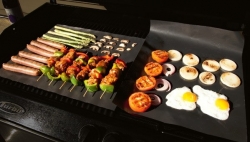
Place your food directly on the mat. Spread items out so that heat circulates evenly. You can cook meat, fish, vegetables, eggs, pancakes, and even cheese sandwiches.
3. Adjust The Heat
Grill mats work best at medium or lower heat. High heat can damage non-stick coatings. Keep the grill temperature below the mat’s maximum limit—usually 500°F.
4. Cook As Usual
Flip, stir, and move your food as you would on regular grates. Use silicone or plastic utensils to avoid scratching the mat’s surface.
5. Watch For Juices
Grill mats catch drips. If cooking fatty meats, be aware that juices may pool. Move food around or tilt the mat gently if needed.
6. Remove Food And Mat
When food is done, use tongs or a spatula to remove it. Let the mat cool before handling it for cleaning.
Non-obvious insight: If you want grill marks, place the food on the mat for the first half of cooking, then finish on the bare grates for a minute or two. This gives you marks without losing the benefits of the mat.

Credit: www.reddit.com
Foods You Can Cook On A Grill Mat
Grill mats are more versatile than many people think. Here are some common and surprising options:
- Burgers and steaks: No sticking, easy flipping.
- Fish: Delicate fillets won’t fall apart or stick.
- Vegetables: Slices, diced pieces, or whole veggies cook evenly.
- Shrimp and seafood: Small pieces stay on the mat and don’t fall through.
- Eggs and omelets: Yes, you can cook breakfast on your grill!
- Pancakes and crepes: Pour batter directly onto the mat.
- Pizza: Place raw dough and toppings on the mat for crispy crust.
- Cheese sandwiches or quesadillas: The mat handles melty cheese with no mess.
- Fruit: Grill pineapple or peaches for dessert.
Grill mats make it easy to experiment with foods you wouldn’t try on open grates.
Common Mistakes When Using Grill Mats
Even experienced grillers make errors with grill mats. Avoid these common mistakes:
1. Overheating The Mat
Setting the grill to high heat can ruin your mat. Always check and respect the maximum temperature.
2. Using Metal Utensils
Metal spatulas or forks can scratch and damage the non-stick surface. Stick to silicone, plastic, or wood.
3. Placing Over Open Flames
Grill mats are designed for indirect heat. Direct contact with flames can cause warping or melting.
4. Skipping Preheating
If you don’t preheat the grill, food may cook unevenly. Always preheat before placing the mat.
5. Overcrowding The Mat
Too much food at once blocks heat and leads to steaming instead of grilling. Leave space between items.
Practical example: Suppose you want to grill sliced zucchini. Don’t pile all the slices in one spot; spread them evenly for perfect grill flavor.
Cleaning And Storing Your Grill Mat
A clean mat lasts longer and gives better results. Here’s how to keep yours in top shape:
Cleaning Steps
- Let it cool: Never wash a hot mat.
- Wipe off residue: Use a paper towel to remove food bits.
- Wash with soapy water: Use a sponge or soft cloth. Avoid abrasive scrubbers.
- Dishwasher safe: Most grill mats can go on the top rack of the dishwasher.
- Rinse and air dry: Make sure the mat is dry before storage.
Storing The Grill Mat
Store mats flat or rolled. Avoid folding, as this can cause creases. Keep mats in a drawer or with your barbecue tools.
Removing Stubborn Stains
If grease or burnt-on food remains, soak the mat in warm, soapy water for 10–15 minutes before scrubbing gently.
Non-obvious insight: Never use cooking spray on a grill mat. It can leave a sticky residue that is hard to remove and may damage the non-stick surface.
Grill Mat Safety Tips
Safety is important when using any cooking tool. Here’s what you need to know:
- Stay below max temperature: Most grill mats are safe up to 500°F. Going higher risks releasing fumes.
- Avoid direct flames: Place mats over the grates, not over open fire.
- Check for damage: Don’t use mats with cracks, peeling, or deep scratches.
- Use food-safe mats: Only use mats labeled as food-grade or FDA-approved.
- Store away from heat: Don’t keep mats near open flames or hot surfaces when not in use.
- Keep mats out of the oven: Some grill mats are not oven-safe. Check the label before using in other appliances.
Pros And Cons Of Using A Grill Mat
It’s smart to weigh both the advantages and disadvantages before making grill mats a regular part of your routine.
| Pros | Cons |
|---|---|
| Easy cleanup | May not give strong grill marks |
| Prevents sticking | Not for extremely high heat |
| Good for small or delicate foods | Some mats wear out after many uses |
| Reusable and eco-friendly | May block some smoky flavor |
| Can cook eggs, pancakes, etc. | Requires gentle cleaning |
Tips For Getting The Best Results
Even small tweaks can make a big difference. Try these tips for better grilling:
- Lightly oil the food, not the mat: This keeps food juicy and adds flavor without damaging the mat.
- Use two mats for large grills: Overlap slightly for full coverage.
- Flip food gently: The non-stick surface makes flipping easy, but use care to avoid tearing delicate items.
- Try different foods: Don’t just stick to meat—experiment with vegetables, fruit, and breakfast items.
- Clean the mat quickly after use: This stops grease from hardening and makes cleaning easier.
Practical example: For perfect grilled salmon, brush fillets with oil, season well, and grill on the mat at medium heat for about 4–5 minutes per side.
Credit: www.ovenclean.com
How Grill Mats Compare To Other Grill Accessories
You might wonder how grill mats stack up against foil, grilling baskets, or grilling pans.
| Accessory | Ease of Use | Reusable | Best For |
|---|---|---|---|
| Grill Mat | Very easy | Yes | Versatile foods |
| Foil | Easy | No | Fish, veggies |
| Grill Basket | Moderate | Yes | Diced food, stir-fry |
| Grill Pan | Moderate | Yes | Bacon, small items |
Non-obvious insight: While foil is cheap and easy, it creates waste and can tear. Grill mats are better for the environment and last for many uses if cared for properly.
Maintenance And Longevity Of Grill Mats
With proper care, a good grill mat can last for dozens of uses. However, like all tools, they eventually wear out.
- Check for wear: Inspect the mat for scratches, peeling, or thinning after each use.
- Replace when needed: If the non-stick layer is coming off or the mat is warped, it’s time for a new one.
- Store flat or rolled: Folding can break the non-stick layer.
Most users get between 30 and 50 uses from a quality mat. Buying a multi-pack can save money in the long run.
Grill Mat Myths And Facts
There are several myths about grill mats that can confuse buyers. Here’s the truth:
- Myth: Grill mats make food taste like plastic.
- Fact: Properly used, food-grade mats do not affect flavor.
- Myth: You can use a grill mat over direct flames.
- Fact: Direct flames can damage the mat and are unsafe.
- Myth: Grill mats are only for beginners.
- Fact: Even professional chefs use mats for delicate foods and easy cleanup.
- Myth: Grill mats are unhealthy.
- Fact: Certified mats are safe. Always avoid mats without food-grade approval.
For more on grilling safety, you can check Wikipedia’s grilling page.

Credit: www.stlbbqstore.com
Frequently Asked Questions
What Is The Maximum Temperature A Grill Mat Can Handle?
Most PTFE grill mats are safe up to 500°F (260°C). Silicone mats usually handle up to 450°F (232°C). Always check your mat’s label and avoid going over the recommended temperature.
Can I Use A Grill Mat In The Oven?
Some grill mats are oven-safe, but not all. Check the packaging or manufacturer’s instructions. Never use a mat above its heat limit. Oven use is great for baking cookies, pizza, or roasting vegetables.
Are Grill Mats Safe For Food?
Yes, as long as you buy food-grade or FDA-approved mats. Cheap mats from unknown brands may not be safe. Always check for certification before buying or using.
Can I Cut A Grill Mat To Fit My Grill?
Yes, most grill mats can be cut with scissors for a custom fit. Trim so that the mat covers the cooking area but does not hang over the edges or touch open flames.
How Do I Store Grill Mats After Use?
Wash and dry the mat completely, then store flat or rolled in a cool, dry place. Avoid folding, which can damage the non-stick surface.
Grill mats are a simple way to make outdoor cooking easier, cleaner, and more fun. With the right mat and a few good habits, you can cook almost anything on your grill—without the usual mess. Next time you fire up the barbecue, try using a grill mat and see the difference for yourself.