
Washing and storing romaine lettuce might seem simple, but doing it right keeps your salad crisp, tasty, and safe to eat. Many people make mistakes that lead to soggy leaves, quick spoilage, or even foodborne illness. If you want your lettuce to last longer and taste fresher, you need to follow a few important steps. As someone who has washed and stored hundreds of heads of lettuce for family meals and large gatherings, I know the common pitfalls and the tricks that really work. Whether you buy lettuce from the supermarket, a farmer’s market, or grow it yourself, this guide will help you keep it fresh and ready for your next meal.
Why Proper Washing And Storage Matters
Romaine lettuce is popular for its crunch and mild flavor. But like all leafy greens, it can carry dirt, bacteria, and pesticides. Washing removes these risks, while proper storage prevents wilting and waste. According to the Centers for Disease Control, leafy greens are linked to 22% of foodborne illness outbreaks from produce.
That means careful cleaning is not just about taste—it’s about safety.
Storing lettuce the right way also saves money. The USDA reports that Americans waste about 25% of fresh produce each year, often because it spoils too quickly. If you learn how to wash and store romaine lettuce well, you can cut this waste and enjoy crisp salads every time.
Choosing Romaine Lettuce: What To Look For
Before washing and storing, start with high-quality lettuce. Here’s what to check:
- Color: Look for bright green leaves. Avoid brown or yellow spots.
- Texture: Leaves should feel firm and crisp. Limp or soft leaves are signs of age.
- Smell: Fresh lettuce has a mild, clean scent. A sour or musty smell means spoilage.
- Shape: Heads should be compact, not loose or sprawling.
- Stems: The base should be white and moist, not dried out.
If you buy pre-cut romaine, check the packaging date and inspect for moisture or browning inside the bag. Choosing good lettuce makes washing and storing easier and more effective.
Credit: rachlmansfield.com
Preparing Romaine Lettuce For Washing
Taking a few minutes to prepare your lettuce makes the washing step smoother. Start by clearing your kitchen sink and washing your hands. Use a clean cutting board and knife. If you bought a whole head, remove any outer leaves that look damaged.
Trim the stem to remove tough or dry parts. If you want bite-sized pieces, cut the leaves now. Otherwise, you can wash whole leaves and tear them later. Separate leaves gently to avoid bruising, as bruised lettuce spoils faster.
How To Wash Romaine Lettuce: Step-by-step
Washing romaine lettuce is more than just rinsing. You need to remove dirt, bacteria, and sometimes pesticides. Here’s the best method:
Step 1: Fill A Clean Bowl With Water
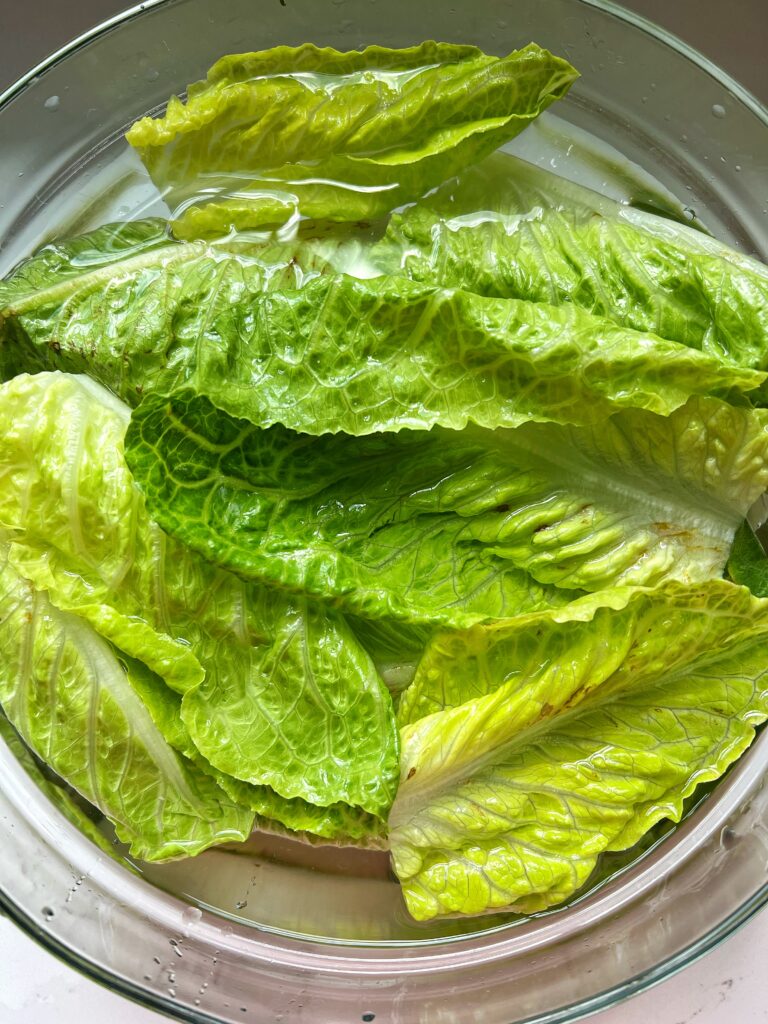
Use a large bowl or basin. Fill it with cold water. Cold water helps keep leaves crisp.
Step 2: Submerge The Leaves
Place separated leaves or pieces into the water. Gently move them around with your hands. Dirt and debris will sink to the bottom. Don’t pack too many leaves at once—this prevents proper cleaning.
Step 3: Let It Soak
Let the lettuce soak for 5–10 minutes. This loosens any hidden dirt and gives bacteria time to detach.
Step 4: Agitate And Lift
Swirl the leaves gently once more. Lift them out of the water and set them aside. Pour out dirty water and repeat with clean water if needed.
Step 5: Rinse Under Running Water
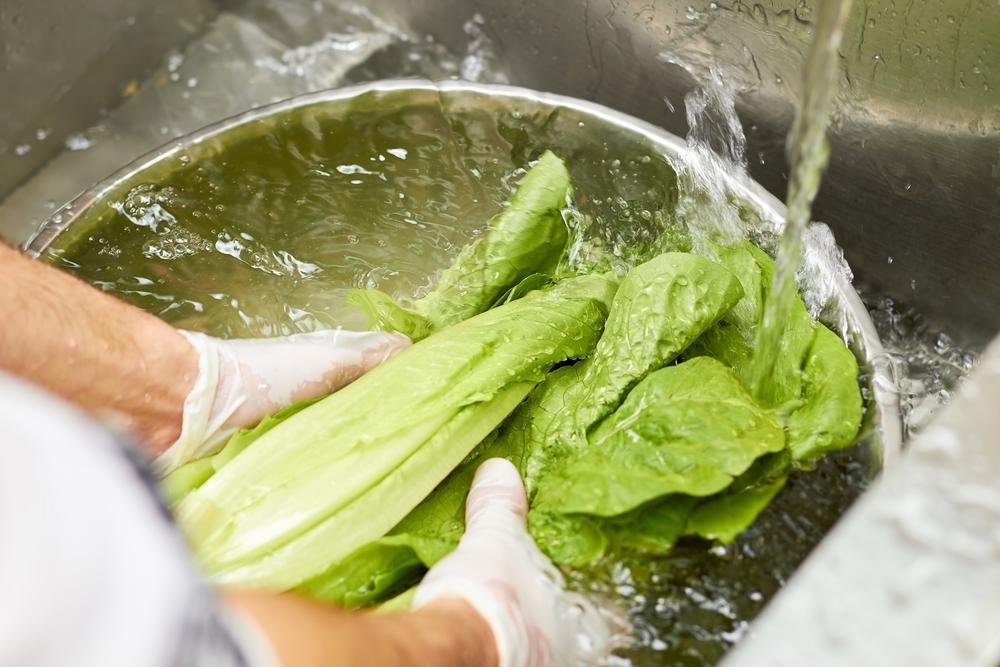
Take each leaf and rinse under cool running water. This final rinse removes anything left from soaking.
Step 6: Dry The Lettuce
Drying is crucial. Wet leaves rot quickly. Use one of these methods:
- Salad spinner: Spin leaves until dry.
- Paper towels: Lay leaves on towels and pat gently.
- Clean kitchen towel: Wrap and press lightly.
Avoid crushing leaves. Dry lettuce lasts longer and tastes better.
Common Mistakes In Washing Lettuce
Many people wash lettuce incorrectly. Here are mistakes to avoid:
- Using warm water (makes leaves limp)
- Skipping the soak (misses hidden dirt)
- Overcrowding in the bowl (prevents proper cleaning)
- Not drying enough (leads to spoilage)
- Using soap or bleach (never safe for food)
Comparing Washing Methods
Not sure if soaking or rinsing works better? Here’s a quick comparison:
| Method | Effectiveness | Time Required | Best For |
|---|---|---|---|
| Soaking in Bowl | Removes more dirt & bacteria | 10–15 min | Whole heads, large batches |
| Rinsing Under Water | Good for surface cleaning | 5 min | Pre-cut, small amounts |
| Washing with Salad Spinner | Combines washing & drying | 10 min | All types, quick prep |
Soaking is best for full heads of lettuce. Salad spinners make drying fast and easy.
Should You Use Vinegar Or Baking Soda?
Some people add vinegar or baking soda to the wash water, hoping to kill bacteria or remove pesticides. Studies show vinegar (1–2 tablespoons per liter of water) can reduce bacteria, but not remove all pesticides. Baking soda helps loosen dirt but does not kill germs.
If you want extra safety, add vinegar—but rinse leaves well afterward to remove taste. Never use strong chemicals or detergent.

Credit: www.youtube.com
Drying Romaine Lettuce: Best Techniques
Drying is often skipped, but it’s the key to crisp salads and longer storage. Wet lettuce is the main cause of soggy salads. Here’s how to dry lettuce well:
Salad Spinner
Place washed leaves in the spinner. Spin until no more water comes out. Salad spinners are affordable and make drying easy.
Paper Towels
Lay lettuce on paper towels, then pat gently. Stack leaves between layers of towel to absorb moisture.
Clean Kitchen Cloth
Use a lint-free kitchen cloth. Wrap lettuce and press gently. This method is eco-friendly.
Air Dry
If you have time, let leaves air dry for 10–15 minutes. Place them in a single layer on a clean surface.
Comparison Of Drying Methods
Here’s how drying methods stack up:
| Method | Drying Time | Effect on Texture | Ease |
|---|---|---|---|
| Salad Spinner | 2–3 min | Keeps crispness | Very easy |
| Paper Towels | 5–10 min | Can flatten leaves | Easy |
| Kitchen Cloth | 5–10 min | No residue | Easy |
| Air Dry | 10–20 min | Best crispness | Needs space |
Salad spinners are best for quick drying, but air drying works well if you’re prepping ahead.
Storing Romaine Lettuce: The Essentials
Once your lettuce is clean and dry, storing it properly is crucial. Romaine lettuce spoils faster than some other greens, but you can keep it fresh for up to 7–10 days with the right methods.
How Long Does Romaine Lettuce Last?
On average, washed and dried romaine lettuce lasts:
- Whole heads: 7–10 days
- Cut leaves: 3–7 days
- Store-bought, pre-cut: 2–5 days
Factors like temperature, humidity, and storage method affect shelf life.
Storage Methods For Romaine Lettuce
There are several ways to store lettuce. Each has pros and cons.
Method 1: Plastic Bag With Paper Towel
Place dry lettuce leaves in a plastic bag. Add a paper towel to absorb moisture. Seal the bag but leave a small gap for airflow. This method prevents wilting and reduces bacteria growth.
Method 2: Airtight Container
Use a clean, airtight container. Line with a paper towel and add dry lettuce. Cover with another towel before sealing. This keeps lettuce crisp and blocks odors from other foods.
Method 3: Lettuce Keeper
Special containers, called lettuce keepers, are designed to maintain humidity and airflow. They are more expensive but work well for larger amounts.
Method 4: Wrapped In Kitchen Towel
Wrap lettuce in a dry kitchen towel and place in a loose plastic bag. This method is eco-friendly and prevents excess moisture.
Method 5: Storing Whole Heads
If you want maximum shelf life, store whole heads (uncut, unwashed) in the fridge. Wash only when ready to use. This avoids moisture build-up.
Comparison Of Storage Methods
Let’s compare these methods:
| Method | Shelf Life | Ease of Use | Eco-Friendly |
|---|---|---|---|
| Plastic Bag + Paper Towel | 7–10 days | Easy | Not eco-friendly |
| Airtight Container | 7–10 days | Easy | Somewhat eco-friendly |
| Lettuce Keeper | 10–14 days | Easy | Eco-friendly (reusable) |
| Kitchen Towel | 7–10 days | Easy | Eco-friendly |
| Whole Head (Unwashed) | 14 days | Easy | Eco-friendly |
Whole heads last longest, but require more prep when you want to use them. Lettuce keepers give extra shelf life, but cost more.
Best Temperature And Humidity For Storage
Lettuce needs cold temperatures, ideally between 1–4°C (34–39°F). Store in the vegetable drawer, which keeps humidity high. Too much moisture causes rot, while dry air makes leaves wilt. If your fridge has humidity controls, set to high.
Practical Tips For Storing Romaine Lettuce
- Store away from ethylene-producing foods (like apples and bananas). Ethylene gas speeds up spoilage.
- Don’t overload the vegetable drawer. Overcrowding leads to bruising and quick spoilage.
- Check stored lettuce every 2–3 days. Remove any wilted or slimy leaves to prevent rot from spreading.
- If lettuce starts to wilt, soak in cold water for 10 minutes. It often revives crispness.
Mistakes To Avoid When Storing Lettuce
- Storing wet leaves (causes rot)
- Sealing bags too tightly (lack of airflow causes spoilage)
- Using old or dirty containers (bacteria can multiply)
- Storing with fruits (ethylene gas speeds up aging)
- Forgetting to change paper towels (they become soggy and spread moisture)
Storing Romaine Lettuce For Meal Prep
If you want lettuce ready for salads or sandwiches, wash and dry leaves, then store in a container with a dry paper towel. Portion into bags for easy use. This works well for meal prepping and saves time during busy weeks.
Should You Freeze Romaine Lettuce?
Freezing lettuce is not recommended. The ice crystals damage cell walls, leaving leaves mushy after thawing. If you must freeze, use lettuce only for cooked dishes, not salads.
Romaine Lettuce Storage Statistics
According to a study published in the Journal of Food Protection, washed romaine lettuce stored at 4°C with proper drying lasted 7–10 days before quality declined. Lettuce stored wet lasted only 2–3 days. Using a lettuce keeper extended shelf life up to 14 days.
Signs Your Romaine Lettuce Is No Longer Fresh
Look for these signs:
- Slimy leaves (common after 7 days)
- Bad smell
- Brown or yellow spots
- Wilted, soft texture
If you see any of these, discard affected leaves. Eating spoiled lettuce can cause stomach upset or worse.
Credit: www.hitchcockfarms.com
Washing And Storing Romaine Lettuce For Large Groups
If you’re preparing lettuce for a party or event, scale up the washing and storage. Use large bowls and salad spinners. Store washed lettuce in multiple containers. Label containers with date to keep track of freshness.
For buffets or salad bars, keep lettuce chilled and covered. Replace with fresh batches every 2–3 hours.
Romaine Lettuce In Meal Kits And Restaurants
Meal kit companies and restaurants use special protocols. They wash lettuce in large sinks, dry with industrial spinners, and store in walk-in coolers. They often use chlorine wash (not recommended at home) to kill bacteria. Home cooks can follow the same principles: clean, dry, store cold.
Cleaning Lettuce From Your Garden
If you grow romaine lettuce, it may have more dirt or bugs. Check for insects and debris. Soak leaves longer and rinse well. Organic lettuce sometimes has more soil; use several rinses.
When To Wash Lettuce: Before Or After Storage?
Some people wash lettuce right after buying, others wait until just before eating. Washing before storage is fine if you dry leaves well. If you want maximum shelf life, store whole heads and wash before use.
Romaine Lettuce Storage Myths
- Myth: Wet lettuce stays fresher. (Truth: Dry lettuce lasts longer.)
- Myth: Plastic wrap is best. (Truth: A breathable bag or container is better.)
- Myth: Lettuce can be frozen for salads. (Truth: Freezing ruins texture.)
Romaine Lettuce And Food Safety
Always wash lettuce, even if labeled “pre-washed.” Recent recalls show even bagged lettuce can carry bacteria. If you want extra safety, wash again. For more on lettuce recalls and safety, see the Wikipedia Lettuce Page.
Bonus Tips For Crisp, Fresh Lettuce
- Store lettuce in the coldest part of your fridge
- Change paper towels every few days to keep moisture balanced
- Use a salad spinner for best results
- Revive wilted leaves by soaking in ice water for 10 minutes
- If you notice brown edges, trim them before storing
- For sandwiches, store leaves flat between towels to avoid folding
- Don’t wash lettuce until ready to eat if you want longest shelf life
Frequently Asked Questions
How Do I Know If Romaine Lettuce Is Safe To Eat?
Check for freshness signs like crisp, green leaves and no slimy spots. Smell the lettuce—if it’s sour or musty, throw it away. Always wash lettuce before eating, even if it’s labeled “pre-washed.”
Can I Use Vinegar To Wash Romaine Lettuce?
Yes, you can add vinegar (1–2 tablespoons per liter) to the soak water. Vinegar helps reduce bacteria, but rinse leaves well afterward to remove taste. It’s not necessary, but useful for extra safety.
What’s The Best Way To Keep Lettuce Crisp?
Dry lettuce thoroughly after washing. Store in a container with paper towel in the fridge. Don’t pack too tightly, and keep away from ethylene-producing fruits. Use a salad spinner for best drying.
Is It Safe To Eat Lettuce That’s Slightly Wilted?
Wilted lettuce is safe if not slimy or brown. Soak wilted leaves in cold water for 10 minutes to revive crispness. If lettuce is slimy or smells bad, discard it.
Can I Store Lettuce With Other Vegetables?
Store lettuce with other leafy greens, but avoid storing with fruits like apples or bananas. These fruits produce ethylene gas, which speeds up spoilage. Keep lettuce in the vegetable drawer for best results.
Taking care when washing and storing romaine lettuce gives you crisp, delicious salads and saves money by reducing waste. With these tips, you’ll enjoy fresher, safer lettuce every time.