
A sparkling clear pool is every owner’s dream. You add the right chemicals, keep the filter running, and wait for the water to look perfect. But sometimes, even after using a flocculant, your pool stays cloudy. This can be confusing and frustrating. If you’re facing this problem, you’re not alone. Many pool owners expect crystal-clear water after flocculation, only to find that the cloudiness remains.
Let’s explore why your pool is still cloudy after flocculant, what you might be missing, and how to finally get your water clear. We’ll dive deep into the causes, solutions, and practical steps, so you can enjoy your pool without worry.
What Is Flocculant And How Does It Work?
A flocculant is a chemical that helps to clear cloudy pool water. When you add it to the pool, it gathers tiny particles (like dirt, algae, or dead bacteria) and makes them stick together. These larger clumps, called flocs, become heavy and sink to the pool floor. Once at the bottom, you can vacuum them out of the pool.
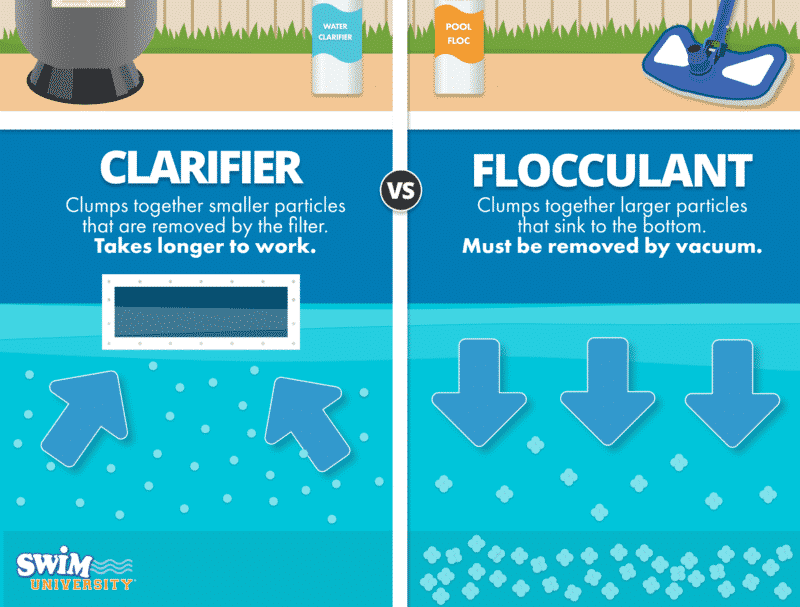
Flocculants are different from clarifiers. A clarifier makes small particles stick together so your filter can catch them. A flocculant, on the other hand, drops the particles to the pool floor, making it easier to remove them in one go. Flocculants are usually used when the pool is very cloudy and normal filtering isn’t enough.
But sometimes, even after following all the steps, the water remains cloudy. Why does this happen? Let’s look at the possible reasons.
Common Reasons Pool Water Is Still Cloudy After Flocculant
Cloudy water after using a flocculant usually means something went wrong. Here are the main causes:
- Poor Pool Circulation
- Filter Issues
- Incorrect Flocculant Dosage
- Not Vacuuming Properly
- High or Low pH Levels
- Residual Algae or Contaminants
- Too Much Organic Material
- High Calcium Hardness
- High Total Dissolved Solids (TDS)
- Unbalanced Chlorine Levels
- Metals in Water
- Using the Wrong Flocculant
- Rain or Fresh Water Dilution
- Problems with Other Pool Chemicals
- Dead Algae Not Removed
Let’s break down each reason and how it affects your pool.
1. Poor Pool Circulation
If your pool pump or circulation system isn’t working well, chemicals and flocculant won’t mix properly. Stagnant water can leave some areas cloudy, especially in corners or behind ladders. Make sure your pump is working and water is moving everywhere.
Tip: Check that all jets are aimed correctly, and there are no blocked returns.
2. Filter Issues
A dirty or broken filter can’t remove particles after you add a flocculant. Sand, cartridge, and DE filters each have their own maintenance needs. If your filter isn’t clean, it may send cloudy water back into the pool.
Practical Example: If you just backwashed your sand filter, but the water is still cloudy, check for sand channeling or old sand that needs replacing.
3. Incorrect Flocculant Dosage
Using too little flocculant won’t gather all the particles. Using too much can create a gummy mess and make the water even cloudier. Always follow the manufacturer’s dosing instructions based on your pool size.
Beginner Mistake: Guessing the amount instead of measuring the pool volume.
4. Not Vacuuming Properly
After flocculation, the flocs must be vacuumed from the pool floor. If you skip this step or vacuum with the filter set to “filter” instead of “waste,” the particles get sent back into the water.
Key Insight: Always vacuum to waste after using flocculant, so debris leaves the pool completely.
5. High Or Low Ph Levels
Flocculants work best when the pool pH is between 7.2 and 7.6. If the pH is too high or low, the floc won’t form correctly and particles stay suspended.
Data: Pools with pH above 8.0 often see no improvement with flocculant use.
6. Residual Algae Or Contaminants
If your pool has live or dead algae, or other contaminants like pollen or sunscreen, flocculant alone may not clear the water. These substances can stay suspended even after flocculation.
Practical Tip: Shock the pool first and brush all surfaces before using flocculant.
7. Too Much Organic Material
Leaves, dirt, or organic waste can overwhelm the flocculant. The pool will stay cloudy if large debris isn’t removed first.
Non-Obvious Insight: Skim and vacuum the pool before adding flocculant to reduce the load.
8. High Calcium Hardness
Excess calcium makes water cloudy, especially when combined with other imbalances. Flocculant doesn’t remove dissolved calcium.
Example: Well water often has high calcium, making cloudiness harder to fix.
9. High Total Dissolved Solids (tds)
TDS are all the dissolved materials in your pool. High TDS can make water look dull and cause flocculant to work poorly.
Solution: Partial draining and refilling may be needed if TDS is above 2000 ppm.
10. Unbalanced Chlorine Levels
Low or very high chlorine can react with the flocculant or allow bacteria to multiply, keeping the pool cloudy.
Data: Aim for free chlorine between 1–3 ppm for best results.
11. Metals In Water
Iron, copper, or manganese in your water can react with flocculant and create cloudy or even colored water. These metals may come from well water or old pipes.
Practical Example: If your pool turns green or brown after flocculation, test for metals.
12. Using The Wrong Flocculant
Not all flocculants are made for every pool type (saltwater, vinyl, fiberglass). Using the wrong product can lead to poor results.
Beginner Tip: Check the label for compatibility with your pool.
13. Rain Or Fresh Water Dilution
Heavy rain or adding a lot of fresh water can dilute chemicals, including the flocculant, making it less effective.
Non-Obvious Insight: Wait until after a rainstorm to use flocculant, not before.
14. Problems With Other Pool Chemicals
Some algaecides, clarifiers, or other chemicals can interfere with flocculant action, leaving water cloudy.
Example: Polyquat algaecide and flocculant can combine to make the water gummy.
15. Dead Algae Not Removed
Dead algae are very small and can pass through some filters. If not removed after flocculation, they keep the water cloudy.
Practical Tip: Use a fine mesh vacuum bag or diatomaceous earth (DE) filter for best results.
Signs Flocculant Has Not Worked
If you’re unsure whether flocculant worked, look for these signs:
- Cloudiness remains unchanged after 24–48 hours.
- Large clumps are floating instead of settling.
- Debris returns to the pool after vacuuming.
- Water looks milky or has a film on top.
These signs suggest something in the process needs to be fixed.
How To Clear A Cloudy Pool After Flocculant
If your pool is still cloudy, don’t lose hope. Here’s a step-by-step plan to get your water clear again.
1. Test And Adjust Water Chemistry
Always start by testing your water with a reliable kit. Pay attention to:
- PH (7.2–7.6)
- Free chlorine (1–3 ppm)
- Total alkalinity (80–120 ppm)
- Calcium hardness (200–400 ppm)
- Cyanuric acid (30–50 ppm)
- TDS (below 2000 ppm)
- Metals (iron, copper)
Adjust levels as needed using pool chemicals. Balanced water lets flocculant work best.
2. Clean And Backwash Filter
A dirty filter spreads cloudy water. Clean or backwash your filter based on the type:
- Sand filter: Backwash until water runs clear.
- Cartridge filter: Remove and hose off thoroughly.
- DE filter: Backwash and add new DE powder.
Non-Obvious Insight: Replace filter media if it’s old or damaged.
3. Remove Large Debris
Use a net to scoop out leaves and anything large before adding flocculant. Large debris reduces flocculant efficiency.
4. Shock The Pool If Needed
If you suspect algae or bacteria, shock the pool with chlorine before flocculating. Brush all surfaces to loosen growth.
5. Add Flocculant Correctly
Follow these steps for best results:
- Read the label for exact dosing.
- Dilute the flocculant in a bucket of water (unless label says otherwise).
- Pour slowly around the pool edge.
- Run the pump for 2 hours to mix.
- Turn off the pump and let water sit still for 8–12 hours.
Practical Tip: Do this overnight when the pool isn’t in use.
6. Vacuum To Waste
After floc has settled, set your filter valve to “waste. ” Carefully vacuum the pool floor, moving slowly so you don’t disturb the settled debris.
Beginner Mistake: Forgetting to refill the pool as you lose water during vacuuming.
7. Top Up Pool And Rebalance
After vacuuming, add water to bring the level back up. Test and adjust chemicals again, especially chlorine and pH.
8. Run The Filter Continuously
Run your filter for at least 24 hours. This helps remove any fine particles left after vacuuming.
9. Use A Clarifier (optional)
If a small cloudiness remains, try a clarifier. It works more slowly but is gentler than flocculant.
10. Repeat If Necessary
In rare cases, you may need to repeat flocculation. But more than two attempts usually means another problem is present.
Comparing Flocculant, Clarifier, And Pool Shock
Understanding when to use each product is important. Here’s a comparison:
| Product | Best For | How It Works | Speed | Special Notes |
|---|---|---|---|---|
| Flocculant | Very cloudy water, visible particles | Binds particles, sinks them to pool floor | Fast (12–24 hrs) | Must vacuum to waste |
| Clarifier | Mild haze, small particles | Clumps particles so filter can catch | Slow (2–5 days) | Safe for all pools, keeps filter running |
| Pool Shock | Algae, organic contamination | Oxidizes and kills contaminants | Medium (24–48 hrs) | Raises chlorine; balance after use |
Key Insight: Flocculant is not for regular maintenance. Use only when water is very cloudy.
Common Mistakes After Using Flocculant
Many pool owners make the same errors after using flocculant. Avoid these to get better results:
- Vacuuming to filter, not waste: This returns debris to the pool.
- Not waiting long enough for floc to settle: Give it at least 8–12 hours.
- Stirring up debris while vacuuming: Move the vacuum head slowly.
- Ignoring water balance: Unbalanced water reduces flocculant effectiveness.
- Overusing flocculant: More is not better; excess can gum up filters.
Credit: www.swimuniversity.com
How To Prevent Cloudy Water In The Future
Once your pool is clear, keep it that way with these tips:
1. Maintain Good Filtration
Run your filter for 8–12 hours daily during swim season. Clean or backwash regularly.
2. Test And Adjust Chemicals Weekly
Check pH, chlorine, alkalinity, and other levels every week. Adjust as soon as you see a problem.
3. Remove Debris Quickly
Skim leaves and dirt daily. Organic material breaks down and clouds the water.
4. Shower Before Swimming
Body oils, lotions, and sweat add to cloudiness. A quick shower helps a lot.
5. Avoid Overusing Chemicals
Follow dosing instructions and avoid mixing different products unless labels say it’s safe.
6. Address Algae Immediately
If you see even a hint of green, treat it right away. Algae can quickly make water cloudy.
7. Monitor Calcium And Tds
Test for calcium and TDS at least once per season. High levels need special treatment.
Troubleshooting Guide: Cloudy Pool After Flocculant
If you’re stuck, use this quick troubleshooting chart:
| Problem | Possible Cause | Solution |
|---|---|---|
| Cloudiness unchanged after 24 hrs | pH out of range, wrong dosage | Test and rebalance, repeat with correct flocculant amount |
| Cloudiness worse after flocculant | Overdosed, not vacuumed to waste | Vacuum to waste, partial drain and refill, balance water |
| Clumps floating, not settling | Pump left on, water not still | Turn off pump, wait 12 hrs, vacuum carefully |
| Metal stains or colored water | Iron or copper in water | Add metal sequestrant, test source water |
| Film or foam on surface | Organic contamination, incompatible chemicals | Shock pool, avoid mixing products |
When To Call A Pool Professional
Sometimes, DIY solutions aren’t enough. Call a pro if:
- Cloudiness lasts more than a week despite all steps.
- Your filter system is old or not working.
- Metal stains or colored water persist.
- You’re unsure about chemical handling.
A qualified pool technician can test, diagnose, and fix issues you may not spot.
Pool Flocculant Myths Debunked
Many myths circulate among pool owners. Here are a few clarified:
Myth: Flocculant clears any cloudy pool instantly.
Fact: Flocculant works only if water chemistry is balanced and debris is removed.
Myth: You can swim right after adding flocculant.
Fact: Always wait until floc has settled and been vacuumed out.
Myth: More flocculant means better results.
Fact: Overdosing can make the pool cloudier and harder to clear.
Real-world Example: Clearing A Cloudy Pool
Let’s walk through a real case. A pool owner added flocculant to a 20,000-gallon pool that was cloudy after a rainstorm. They followed the label, but the pool stayed cloudy. What went wrong?
- Water testing showed pH was 8.2—too high for flocculant to work well.
- They vacuumed to “filter” instead of “waste,” sending debris back into the pool.
- The filter sand was 7 years old and not filtering well.
After correcting the pH to 7. 4, vacuuming to waste, and replacing the sand, the pool cleared in 36 hours.
Lesson: Always check water balance and filter condition before and after using flocculant.
Advanced Tips For Stubborn Cloudy Pools
If your pool is still cloudy after trying everything above, consider these advanced steps:
Use A Pool Enzyme
Enzymes break down organic waste that chlorine and flocculant can miss. These can help with cloudy water caused by oils or sunscreen.
Try A Filter Aid
Filter aids like diatomaceous earth can be added to sand or cartridge filters to improve fine particle removal.
Partial Water Replacement
For high TDS or calcium, draining 1/3–1/2 of the pool and refilling with fresh water is sometimes the only solution.
Check For Hidden Algae
Sometimes algae grow in lights, ladders, or behind returns. Remove and clean these parts if cloudiness won’t go away.

Credit: www.reddit.com
The Role Of Weather And Environment
Your environment affects your pool more than you think. Dust storms, pollen, high winds, or nearby trees can add debris and cloud the water. After severe weather, clean your pool and check water balance before adding flocculant.
Expert Tip: Consider a pool cover when not in use to prevent debris.
Understanding Your Pool Type
Concrete, vinyl, fiberglass, and above-ground pools may react differently to flocculants. Always choose the right product and adjust your cleaning method based on your pool surface and filter type.
Non-Obvious Insight: Vinyl pools are more sensitive to overdosing; use only products labeled safe for vinyl.
Credit: www.youtube.com
Frequently Asked Questions
Why Did My Pool Stay Cloudy After Using Flocculant?
The most common reasons are unbalanced water chemistry, not vacuuming to waste, or a dirty filter. Check pH, chlorine, and ensure all debris is removed after flocculation.
How Long Does It Take For Flocculant To Clear A Pool?
Usually, flocculant works within 12–24 hours if the water is balanced and you follow instructions. Some pools may take longer if there is heavy contamination.
Can I Swim In My Pool While It’s Cloudy After Using Flocculant?
No, swimming in cloudy water is unsafe. Wait until the floc has settled, you’ve vacuumed, and the pool is clear before swimming.
How Often Can I Use Flocculant?
Flocculant is for occasional use only. If you need it more than once per season, check for ongoing problems with filtration or water balance.
Are There Natural Ways To Clear Cloudy Water Without Chemicals?
Regular skimming, good filtration, and keeping water balanced can prevent cloudiness. For severe cases, chemical flocculation is usually needed, but you can reduce chemical use with good maintenance.
For further reading on pool water chemistry, check the CDC’s guide to pool disinfection.
Keeping your pool clear after flocculant isn’t magic—it’s about understanding the science and staying on top of maintenance. With these tips, your water will be sparkling again soon, ready for a safe and refreshing swim.