
Many pool owners use borax to keep their water clean, safe, and sparkling. Borax, a common household chemical, helps control pH, soften water, and prevent algae growth. But what happens when you add too much borax to your pool? Understanding the risks and solutions is vital for anyone who wants a healthy swimming environment.
This article explains what borax does, why excess is a problem, and how to fix issues caused by overdosing. You’ll find practical steps, expert insights, and real examples to help you maintain your pool safely.
What Is Borax And Why Use It In Pools?
Borax, also known as sodium borate, is a white mineral powder. Many people know it as a laundry booster, but it’s also used in pools. Borax helps raise pH and acts as a buffer, keeping the water from getting too acidic. It’s valued because it is easy to handle, affordable, and less harsh than many chemicals.
Some benefits of borax in pools include:
- Stabilizing pH levels: It raises pH without making total alkalinity rise too fast.
- Water clarity: Borax helps keep water clear and sparkling.
- Softening effect: It can make pool water feel smoother on the skin.
- Algae prevention: It creates an environment where algae struggle to grow.
However, these benefits depend on using the right amount. When you add too much, problems can occur quickly.
How Much Borax Is Safe For Pools?
For most swimming pools, borax is used to maintain a pH between 7.2 and 7.6. The typical dose is about 20 ounces of borax per 5,000 gallons of water to raise pH by 0.2 units. Many pool experts recommend keeping borate (the chemical form borax becomes in water) at 30–50 ppm (parts per million). This range helps the pool stay balanced and safe.
Here is a quick look at borax dosing:
| Pool Size (gallons) | Borax Needed to Raise pH by 0.2 | Safe Borate Level (ppm) |
|---|---|---|
| 5,000 | 20 oz (about 1.25 lbs) | 30–50 |
| 10,000 | 40 oz (about 2.5 lbs) | 30–50 |
| 20,000 | 80 oz (about 5 lbs) | 30–50 |
If you go much above 50 ppm, you risk too much borax in pool water. Some commercial pools may allow up to 80 ppm, but for home pools, lower levels are safer.
Signs You Have Too Much Borax In Your Pool
Many people don’t realize they’ve overdosed borax until problems start. Watch for these warning signs:
- Very high pH: The pH may rise above 7.8 or even 8.0, making chlorine less effective.
- Cloudy water: Excess borax can make water look dull or milky.
- Irritated eyes and skin: Swimmers may complain of stinging, redness, or dryness.
- White deposits: You might see scaling on pool walls, ladders, or equipment.
- Algae growth: Surprisingly, too much borax can reduce chlorine’s power, letting algae grow.
Not all these signs appear at once. Sometimes, only your test kit will reveal a problem.
Why Is Too Much Borax Dangerous?
Adding extra borax seems harmless, but it creates several risks for your pool and swimmers.
1. Chemical Imbalance
High borate levels push the pH higher. When pH is above 7.8, chlorine doesn’t work well. This means bacteria and algae can survive, even if you add more chlorine. The chemical imbalance can damage your pool’s plaster, vinyl, or tile.
2. Health Risks For Swimmers
While small borate levels are safe, too much can cause:
- Eye and skin irritation
- Upset stomach if water is swallowed
- Headaches or dizziness for sensitive people
Children and pets are especially at risk if they drink pool water with high borate.
3. Equipment Damage
Overdosing borax causes scaling on pool surfaces and inside heaters, pumps, or filters. This reduces efficiency, shortens equipment life, and can be expensive to fix.
4. Wasted Chemicals And Cost
Trying to balance the water after overdosing borax is tough. You might end up adding more acid, buying more test kits, and sometimes draining water. All this increases costs and wastes time.
How Does Borax Affect Pool Chemistry?
Understanding how borax works helps explain why too much is a problem.
- PH Buffering: Borax resists quick changes in pH. This is good—until the level gets too high, making it hard to lower pH again.
- Alkalinity Impact: Borax does not directly raise alkalinity, but repeated high dosing can shift the balance.
- Chlorine Efficiency: High pH from excess borax means chlorine turns into less active forms, which kill germs slowly.
- Interaction with Other Chemicals: High borate levels can interact with calcium, making scale more likely.
Here’s a comparison of pool water with safe vs. excessive borax:
| Property | Safe Borax Level (30–50 ppm) | Excess Borax (>50 ppm) |
|---|---|---|
| pH Stability | Good control | Very high, hard to adjust |
| Chlorine Effectiveness | Optimal | Reduced, more germs survive |
| Water Clarity | Clear | Cloudy or dull |
| Scaling Risk | Low | High, especially with calcium |
| Swimmer Comfort | Comfortable | Itchy or irritated |
How To Test For Borax Levels In Your Pool
Most pool kits test for pH, chlorine, and alkalinity. Testing borate specifically requires a special kit or strips. Here’s how to check:
- Get a borate test kit (often called boron or borate test strips).
- Collect a water sample from elbow depth, away from jets.
- Dip the strip or use drops as directed.
- Compare the color to the chart on the package.
- Record your result and check if it falls between 30–50 ppm.
Test after any borax addition and at least once a month during the season. If you have cloudy water or high pH, check borate even if you haven’t added it recently—sometimes mistakes happen.
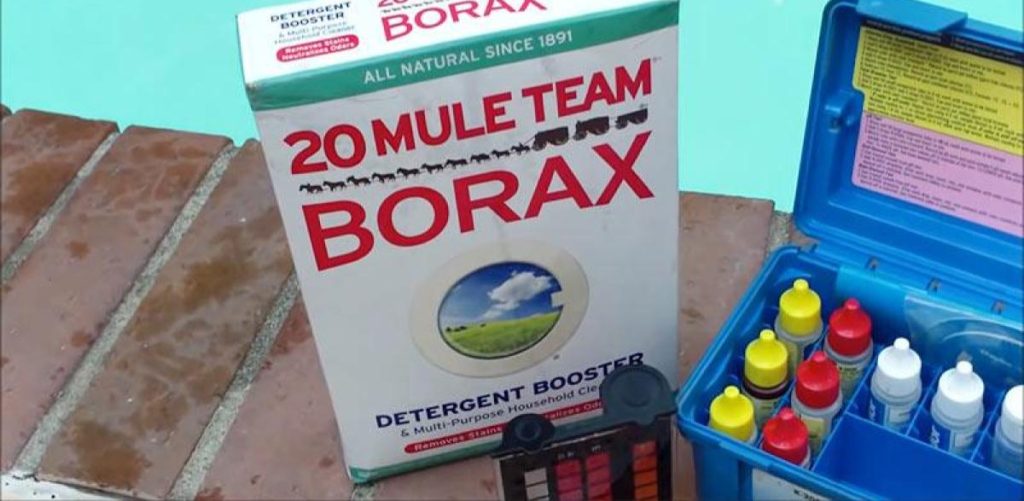
Credit: www.testyourownpool.com
What To Do If You Added Too Much Borax
If you find too much borax in pool water, don’t panic. There are proven steps to fix it. The solution depends on how much you overdosed.
1. Stop Adding Borax
The first step is obvious—no more borax until levels are safe.
2. Test And Confirm
Double-check borate, pH, and alkalinity. Sometimes, what looks like a borax problem is really high pH from another source.
3. Partial Drain And Refill
The most effective way to lower borate is to remove some pool water and add fresh water. This dilutes borate and other chemicals.
Example:
If your pool is at 80 ppm and you want to reach 40 ppm, you’ll need to replace half the water.
| Current Borate (ppm) | Target Borate (ppm) | Water to Replace |
|---|---|---|
| 80 | 40 | 50% |
| 60 | 40 | 33% |
| 100 | 40 | 60% |
Tip: Always refill with clean, chemical-free water.
4. Lower Ph With Acid
If pH is high, use muriatic acid or dry acid to bring it back to 7.2–7.6. This helps chlorine work again and makes swimming more comfortable.
How to do it:
- Add acid slowly with the pump running.
- Retest after 2–4 hours.
- Never add large amounts at once.
5. Vacuum And Brush The Pool
Scale and deposits are common after borax overdosing. Brush all surfaces and vacuum debris, so the filter can remove it.
6. Clean The Filter
High borate may cause buildup in your filter. Backwash or clean cartridge filters after treating the water.
7. Monitor Swimmer Health
If swimmers had irritation, keep the pool closed until levels are safe. Pets should also be kept away.
8. Retest Regularly
After fixing the problem, test borate weekly for the next month. Problems sometimes return if you missed a step.
How To Avoid Overdosing Borax
Mistakes happen, but these tips help prevent future problems:
- Measure carefully: Always use a scale or marked scoop.
- Record additions: Write down how much borax you add each time.
- Calculate before dosing: Use pool calculators online to adjust doses.
- Never guess by eye: Powder can look smaller in large scoops.
- Test after every addition: Check pH and borate before adding more.
- Store chemicals safely: Keep borax away from kids and pets, and label containers clearly.
- Educate pool helpers: Make sure anyone who adds chemicals knows the right amount.
One non-obvious tip: Borax can hide in “all-in-one” pool products. Always check labels so you don’t double-dose by mistake.

Credit: beatbot.com
Real-life Examples: What Happens With Too Much Borax
Example 1: Cloudy Pool After A Party
A homeowner added a “little extra” borax before a pool party, thinking it would help with clarity. After two days, the water turned cloudy, and guests complained of itchy eyes. Testing showed borate at 90 ppm and pH above 8.
0. The solution was a 50% water change and acid dosing. The water cleared in three days.
Example 2: Scaling On Tiles
A pool service company found thick white deposits on a customer’s tiles and heater. The cause: borax added every week for months, raising borate to 120 ppm. The fix required draining 60% of the pool, scrubbing, and adjusting pH. The heater recovered, but the tile needed professional cleaning.
Example 3: Pet Health Scare
A dog drank from a pool with very high borate (over 100 ppm). The pet became sick with vomiting and lethargy. A vet visit and safe water change were needed. Luckily, the dog recovered, but the owners learned to keep pets away and test borate monthly.
These examples show that even experienced owners can make mistakes. Small overdoses may not cause trouble right away, but long-term problems build up.
The Role Of Borax In Different Pool Types
Not all pools respond to borax the same way. Here’s how it works in common pool types:
Chlorine Pools
Borax is mostly used in chlorine pools to keep pH stable and water clear. The risks of overdose are as described above—cloudiness, scaling, and lost chlorine power.
Saltwater Pools
Many saltwater pool owners use borax to balance pH, since salt cells tend to raise it. The same overdose risks apply, but saltwater pools can also have rapid pH swings, so careful dosing is even more important.
Above-ground Pools
Smaller above-ground pools are at higher risk because a small measuring mistake has a bigger impact. Always use smaller doses and test more often.
Natural And Eco Pools
Borax is usually not recommended for natural pools that use plants or biofilters. High borate can harm beneficial bacteria and plants.
Borax Vs. Other Ph Buffers: Why Choose Borax?
Pool owners sometimes ask why not use baking soda, soda ash, or other chemicals instead of borax. Here’s a comparison:
- Baking soda (sodium bicarbonate): Raises alkalinity more than pH.
- Soda ash (sodium carbonate): Raises pH quickly, but also alkalinity.
- Borax: Raises pH with less impact on alkalinity and gives water a “sparkling” look.
However, borax is not a one-size-fits-all solution. If you need to adjust alkalinity, baking soda is better. For rapid pH changes, soda ash works faster. Borax is best for gentle, long-term pH control.
Long-term Effects Of High Borax Levels
Some pool owners wonder if high borate is really so bad in the long run. The answer: yes, it can cause chronic problems.
- Scale buildup: Over years, high borate and calcium combine to make thick, hard-to-remove scale.
- Liner fading: Vinyl liners may fade or get brittle with high borate.
- Heater and pump damage: Internal scaling reduces efficiency, increases energy bills, and shortens equipment life.
- Regulatory issues: Some local rules limit borate use for environmental safety.
Pools with high borate for years often need expensive draining, cleaning, and repairs.
Environmental Concerns: Where Does Borax Go?
After draining pool water with high borax, where does it end up? Borates are not highly toxic, but in large amounts, they can harm plants and soil. That’s why many experts recommend:
- Draining onto grass or soil only in small amounts
- Avoiding storm drains, lakes, or streams
- Checking local laws before draining large pools
For more on borax and the environment, see the EPA’s advice at EPA Boron Factsheet.
Common Mistakes When Using Borax In Pools
Many people make the same errors when handling borax:
- Guessing pool size: Accurate calculation is key. A 10% mistake can double the dose.
- Not testing borate: Relying only on pH or chlorine tests misses borax buildup.
- Mixing with other chemicals: Some products already contain borate—check labels to avoid stacking.
- Pouring borax in one spot: Always broadcast borax around the pool for even mixing.
- Neglecting filter cleaning: After chemical changes, clean or backwash the filter to remove any deposits.
One insight: Many beginners forget that evaporation does not remove borate. Only draining water lowers it. Topping up from splash-out won’t solve overdosing.

Credit: beatbot.com
Practical Tips For Safe Borax Use
- Always dissolve borax in a bucket first before adding to the pool. This prevents clumps and uneven mixing.
- Add borax with the pump running to distribute it quickly.
- Wait and retest: Chemical changes can take hours. Don’t rush to add more if the test isn’t perfect right away.
- Label all chemicals clearly and store away from moisture.
A less-known tip: If you have a pool automation system, program reminders to check borate monthly. This avoids forgetting and overdosing by accident.
When To Call A Pool Professional
If your borate is above 100 ppm, the pool is cloudy, and water changes are difficult, it’s smart to call a pool service expert. They can:
- Test with advanced equipment
- Recommend the best fix (drain, acid, filter changes)
- Check for hidden damage
This is especially important if you have expensive pool heaters, salt systems, or delicate liners.
Frequently Asked Questions
What Is The Ideal Borate Level For A Residential Pool?
The best range is 30–50 ppm. This keeps pH stable, water clear, and swimmers comfortable. Commercial pools may use up to 80 ppm, but for home pools, staying below 50 ppm is safest.
How Often Should I Test Borate Levels?
Test at least once per month during swimming season, and always after adding borax. If you notice water problems, test right away.
Can I Use Household Borax From The Laundry Aisle In My Pool?
Yes, but make sure it’s pure sodium borate without perfumes or additives. Some brands add fragrances or fillers, which can cause foam or other issues.
Is High Borate Dangerous For Pets And Wildlife?
Yes. Pets that drink pool water with high borate may get sick. Large amounts in the environment can also harm plants and some insects.
How Do I Know If My Pool Needs Borax At All?
Not all pools need borax. If your pH stays steady and water is clear, you may not need it. Only use borax if tests show low pH and you want the benefits of borate.
Too much borax in your pool is a fixable problem, but it pays to act early. Careful testing, smart dosing, and knowing what to watch for will keep your pool safe, clear, and fun for everyone. Regular attention is the best way to avoid costly mistakes and enjoy a worry-free swim season.