
Swimming pools are popular places for fun, exercise, and relaxation. Most backyard pools use chlorine to keep the water clean and safe. However, many pool owners wonder what would happen if they add salt to a chlorine pool. Is it dangerous, pointless, or can it even improve water quality? The answer is not simple, and it depends on how much salt you add, the type of pool system you have, and your maintenance habits.
This article explores what happens when you put salt in a chlorine pool. You’ll learn about water chemistry, equipment effects, safety issues, and the real pros and cons. If you’re curious about mixing salt and chlorine or thinking about switching to a saltwater system, you’ll find clear answers here.
Understanding Chlorine Pools
Before adding anything to a pool, it’s important to know how a chlorine pool works. Chlorine pools rely on regular chlorine additions (as liquid, tablets, or powder) to kill bacteria, control algae, and keep water sparkling. Chlorine does this by releasing a compound called hypochlorous acid when dissolved in water.
The amount of chlorine in a pool must be carefully balanced. Too little, and germs can grow. Too much, and swimmers may experience irritation. Pool owners test chlorine levels often and adjust as needed.
Salt is not usually part of this process. In a regular chlorine pool, the water is fresh, with only a small amount of dissolved minerals.
Why Do People Add Salt To Pools?
Many pool owners have heard about saltwater pools. These are pools that use salt and a special device called a salt chlorine generator. The generator converts salt into chlorine, which keeps the pool clean. Some people think saltwater pools are “chlorine-free,” but this is not true. They still use chlorine, just made from salt.
People may want to add salt to a chlorine pool for several reasons:
- They believe it will make the water softer.
- They think salt will reduce chlorine smell or irritation.
- They want to start converting their pool to a saltwater system.
- They are curious or want to experiment.
However, adding salt to a standard chlorine pool without a generator is different than having a true saltwater system.
What Happens Chemically When You Add Salt?
When you pour salt (sodium chloride) into a chlorine pool, the salt dissolves quickly. Sodium chloride splits into sodium and chloride ions. However, in a regular chlorine pool, there is no machine to turn these ions into new chlorine.
The salt stays in the water, making it slightly salty. But, it does not disinfect the pool or replace your usual chlorine sanitizer.
How Much Salt Will You Notice?
A typical chlorine pool has a salt level of 0-500 ppm (parts per million) just from tap water and chemicals. By contrast, a saltwater pool usually has about 3,000-3,500 ppm of salt. For comparison, seawater is about 35,000 ppm—ten times saltier than a salt pool.
If you add a small amount (a few pounds per 10,000 gallons), you may not notice a big change. But if you add several bags, you might feel a slight salty taste or slipperiness.
| Water Type | Salt Level (ppm) | Taste/Feel |
|---|---|---|
| Freshwater pool (chlorine) | 0–500 | No salt taste |
| Saltwater pool | 3,000–3,500 | Slightly salty, softer feel |
| Ocean | 35,000 | Very salty |
Will Salt Make Your Pool Softer?
Many people believe that adding salt will make pool water feel softer or silkier. This is partly true. At around 3,000 ppm (like in a saltwater pool), water can feel smoother on your skin. This is not because of “softening” (removing minerals), but because salt changes the water’s texture.
However, adding a small amount of salt (say, 500–1,000 ppm) to a chlorine pool will probably not create a big change in feel. You need a higher level, close to a real saltwater pool, to notice a difference.
Does Salt Replace Chlorine Or Lower Maintenance?
Some pool owners hope that putting salt in a chlorine pool will reduce the need for chemical chlorine. In reality, salt alone does not sanitize your pool. Only a salt chlorine generator can use that salt to make new chlorine.
If you just add salt to a chlorine pool, you will still need to add chlorine as usual. The salt will not keep your pool clean, prevent algae, or remove germs.
A common mistake is thinking that salt is a substitute for chlorine. This can lead to unsafe water and health risks for swimmers.
Effects On Pool Equipment
Adding salt to your pool water can have both positive and negative effects on your pool’s equipment and surfaces.
Corrosion Risks
Salt is a corrosive substance. At low levels, it may not cause problems. But at higher levels (1,500 ppm and above), salt can start to speed up corrosion of metal parts in your pool:
- Ladders
- Handrails
- Light fixtures
- Heater parts
- Pump components
If your pool is made of or contains metal, adding salt may shorten its life. This is especially true if you add a lot of salt but do not have equipment designed for saltwater.
Impact On Pool Surfaces
Salt can also affect the surface of your pool. If you have a concrete, plaster, or tile pool, salt at normal levels is usually safe. However, if you add too much, it can cause:
- Surface etching
- Discoloration
- Grout damage (in tile pools)
Vinyl pools are less affected, but the metal walls behind the liner can corrode if salt gets behind the liner.
Salt And Pool Heaters
Gas pool heaters often contain copper or other metals. Salt can increase the rate of corrosion, especially if your pool water is out of balance (too acidic or too alkaline). This can lead to expensive repairs or leaks.
Pool Equipment Comparison
Here’s how different pool types and equipment respond to salt in the water:
| Pool Type/Equipment | Low Salt (0–500 ppm) | High Salt (1,500+ ppm) |
|---|---|---|
| Stainless steel ladder | Safe | Possible rust/corrosion |
| Vinyl liner | Safe | Safe, but watch for wall corrosion |
| Concrete/plaster surface | Safe | May etch or discolor |
| Heater (metal parts) | Safe | Corrosion risk |
| Pump (plastic parts) | Safe | Safe |
Salt And Pool Water Chemistry
Adding salt will affect your pool’s water chemistry, but not as much as you might think. Here are the key changes:
Ph Levels
Salt itself does not raise or lower the pH of your pool. However, if you add too much, it may make your pool water more likely to scale (form white deposits). This is because high salt can interact with calcium and other minerals in the water.
Total Dissolved Solids (tds)
Salt increases your pool’s total dissolved solids (TDS). TDS is a measure of all substances dissolved in the water—salt, minerals, stabilizer, etc. High TDS can sometimes make water cloudy or reduce sanitizer effectiveness. Most pools are safe up to 1,500 ppm TDS (not counting salt). If TDS gets much higher, you may need to drain and refill some water.
Chlorine Demand
Adding salt will not change how much chlorine your pool uses. Germs, sun, and swimmers are what cause chlorine to get used up. The only way salt helps is if you have a salt chlorine generator (which makes new chlorine from salt).
Water Balance
If you add a lot of salt, you should check your pool’s water balance (pH, alkalinity, calcium hardness) more often. Salt can make other chemicals less effective if it gets too high.
Salt And Swimmer Experience
How does salt affect the way your pool feels and smells? Here’s what you can expect:
Water Feel
At low salt levels, you probably won’t notice a difference. At around 3,000 ppm, water feels smoother and less harsh on the skin and eyes. Some swimmers prefer this, especially those with sensitive skin.
Smell
Salt does not remove the “chlorine smell.” The smell comes from chloramines, which are byproducts of chlorine reacting with sweat or urine. Adding salt will not lower this smell in a regular chlorine pool.
Eye And Skin Irritation
Salt at higher levels (like a saltwater pool) may reduce irritation for some swimmers, but only if you also reduce the amount of added chlorine. In a regular chlorine pool, adding salt will not make a big difference.
Taste
If you add a lot of salt, the water may taste slightly salty. Most people won’t notice until levels reach 2,500–3,000 ppm.
Is It Safe To Swim After Adding Salt?
Yes, it is generally safe to swim after adding a reasonable amount of pool salt. Salt is not toxic in the amounts used in pools. However, there are a few precautions:
- If you add a large amount, wait until the salt is fully dissolved.
- Test your water to make sure salt is not above 3,500 ppm.
- Avoid adding salt to a pool with metal problems or leaks.
If you accidentally add too much salt, it is not dangerous for people, but it can harm your pool equipment.
How To Add Salt Properly (if Needed)
If you want to add salt to your chlorine pool for comfort, do it carefully:
- Test your pool water with a salt test strip to see the current level.
- Decide on your target level (usually 1,000–2,000 ppm for feel, 3,000 ppm for generators).
- Add pool-grade salt (never table salt, which can have additives).
- Pour the salt slowly around the pool edge while the pump is running.
- Brush the pool bottom to help dissolve the salt.
- Wait several hours, then retest the water.
- Do not exceed 3,500 ppm unless your pool is designed for salt.
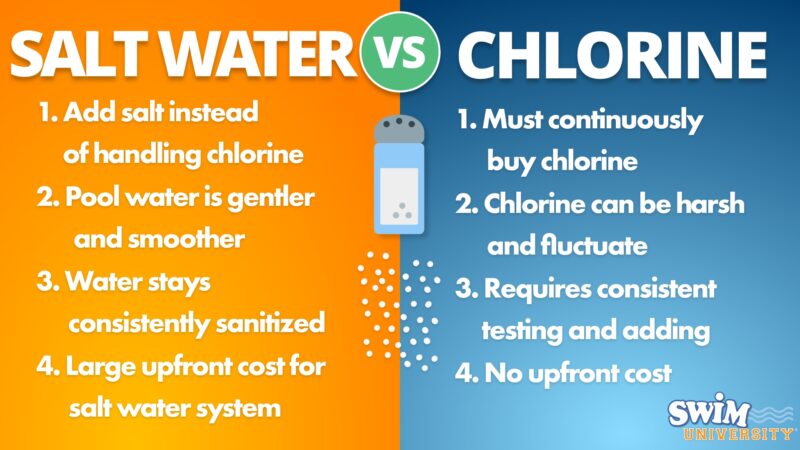
If you plan to convert to a saltwater pool, you will need a proper salt chlorine generator and may need to upgrade equipment to handle salt.
Credit: www.swimuniversity.com
Common Myths About Salt And Chlorine Pools
Many pool owners believe myths about salt and chlorine. Here are the facts:
- Myth: Salt pools do not use chlorine.
Fact: Saltwater pools use chlorine, but they make it from salt.
- Myth: Adding salt replaces the need for chlorine.
Fact: Without a generator, salt does not sanitize the water.
- Myth: Salt will fix cloudy or green water.
Fact: Salt does not kill algae or clear water without chlorine.
- Myth: Saltwater pools are maintenance-free.
Fact: Saltwater pools need testing, balancing, and cleaning like regular pools.
When Should You Not Add Salt?
There are situations where you should avoid adding salt to your chlorine pool:
- If you have old or rusting metal parts.
- If your pool’s TDS is already high.
- If your pool surface is damaged or cracking.
- If you do not plan to install a salt chlorine generator.
In these cases, adding salt can cause more harm than good.
How To Remove Excess Salt
If you accidentally add too much salt, you can lower it by:
- Draining a portion of your pool water.
- Refilling with fresh water.
- Retesting salt levels.
- Repeating until you reach the desired range.
Remember, salt does not evaporate; it stays in the water until removed.
Costs Of Adding Salt
Adding salt is relatively cheap (about $5–$10 per 40-pound bag). However, the real cost comes if you damage pool equipment or need to replace corroded parts. Repairs for heaters, ladders, and lights can be expensive.
If you fully convert to a salt system, the generator can cost $800–$2,000 plus installation.

Credit: www.compoundchem.com
Environmental Impact
Salt in pools eventually gets drained into the environment. High salt levels can harm plants and soil. If you live in an area with strict water rules, check before adding large amounts of salt.
Is A Saltwater System Better?
Many people wonder if they should switch to a saltwater pool. Here’s a quick comparison:
| Feature | Chlorine Pool | Saltwater Pool |
|---|---|---|
| Sanitizer Used | Added chlorine | Chlorine made from salt |
| Feel | Normal water | Softer, less irritation |
| Equipment Corrosion | Low risk | Higher risk (metals) |
| Maintenance | Regular chemical additions | Monitor generator, add salt |
| Start-up Cost | Low | High (generator purchase) |

Credit: www.swimmingpoolsteve.com
Insights Beginners Usually Miss
- Salt is not a sanitizer—it only helps make chlorine if you have the right equipment.
- Equipment compatibility matters—many older pools have metal parts that can rust quickly when salt is added, leading to expensive repairs.
- Salt stays in the water—unlike chlorine, salt does not break down or evaporate. Every bag you add increases the level until you drain the pool.
Practical Tips For Pool Owners
- Always test your pool water before and after adding anything.
- Use only pool-grade salt (no table salt or ice melt).
- Monitor all chemical levels (chlorine, pH, alkalinity, calcium, TDS).
- Watch for early signs of corrosion on ladders or lights.
- If you want a saltwater pool, upgrade to a salt chlorine generator and compatible equipment.
When To Call A Pool Professional
If you’re not sure about your pool’s salt level or see rust, leaks, or discoloration, call a pool expert. They can test the water and recommend safe solutions.
Final Thoughts
Adding salt to a chlorine pool can slightly change the way the water feels, but it does not clean the pool or reduce the need for chlorine. If you add a little salt, there is usually no harm. But adding a lot, or adding salt to a pool with metal equipment, can cause corrosion and expensive repairs. If you want the benefits of a saltwater pool, install a salt chlorine generator and upgrade parts as needed.
Remember, salt and chlorine each have a role. Mixing them without understanding the chemistry can create problems. Stay informed, test often, and enjoy your pool safely.
For more in-depth science on pool water chemistry, visit the Wikipedia page on swimming pool sanitation.
Frequently Asked Questions
What Is The Main Difference Between A Saltwater Pool And A Chlorine Pool?
A chlorine pool uses added chlorine (liquid, powder, or tablets) to clean the water. A saltwater pool uses a salt chlorine generator to turn salt into chlorine. Both pools use chlorine as the active sanitizer, but the source is different.
Will Adding Salt To My Chlorine Pool Save Me Money?
No, adding salt alone will not lower costs or reduce chemical use unless you install a salt chlorine generator. Otherwise, you must still buy and add chlorine as before.
Can Adding Salt To A Chlorine Pool Make The Water Unsafe?
Salt in normal amounts (up to 3,500 ppm) is safe for swimmers. However, too much salt can harm pool equipment or cause slippery surfaces. Very high levels (above 5,000 ppm) may make water taste bad and damage pool parts.
Does Salt Stop Algae Or Bacteria In A Chlorine Pool?
No, salt does not kill algae or bacteria unless you have a generator making chlorine from salt. In a standard chlorine pool, only chlorine and good water balance control germs.
How Do I Know If My Pool Has Too Much Salt?
Use a salt test strip or digital salt tester. Ideal salt levels for comfort are below 3,500 ppm. If your reading is higher, drain some water and refill with fresh water to lower the salt concentration.